Helderberg 2 Skaalsteeker Bat Cave
By Peter Swart, May 2007
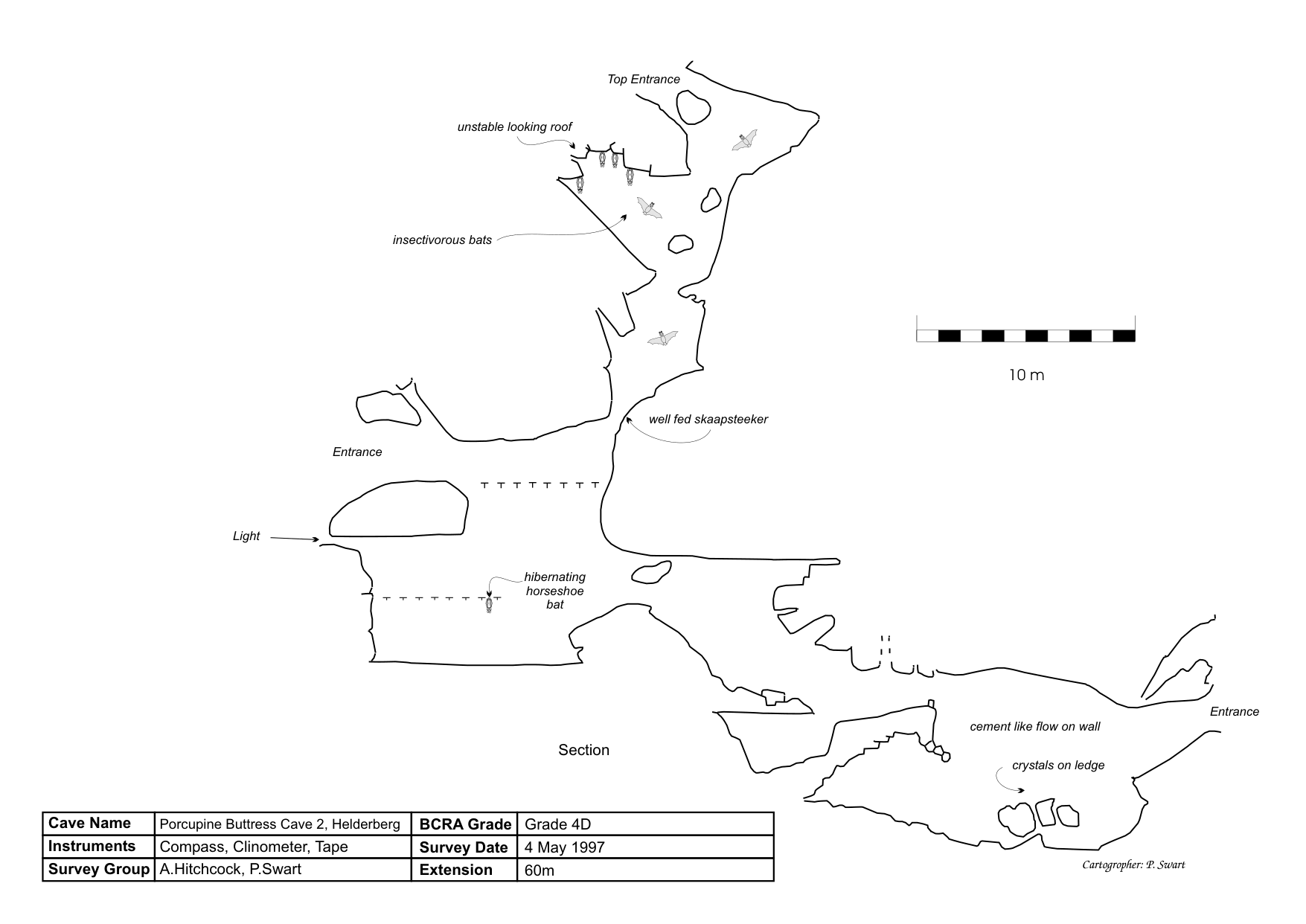
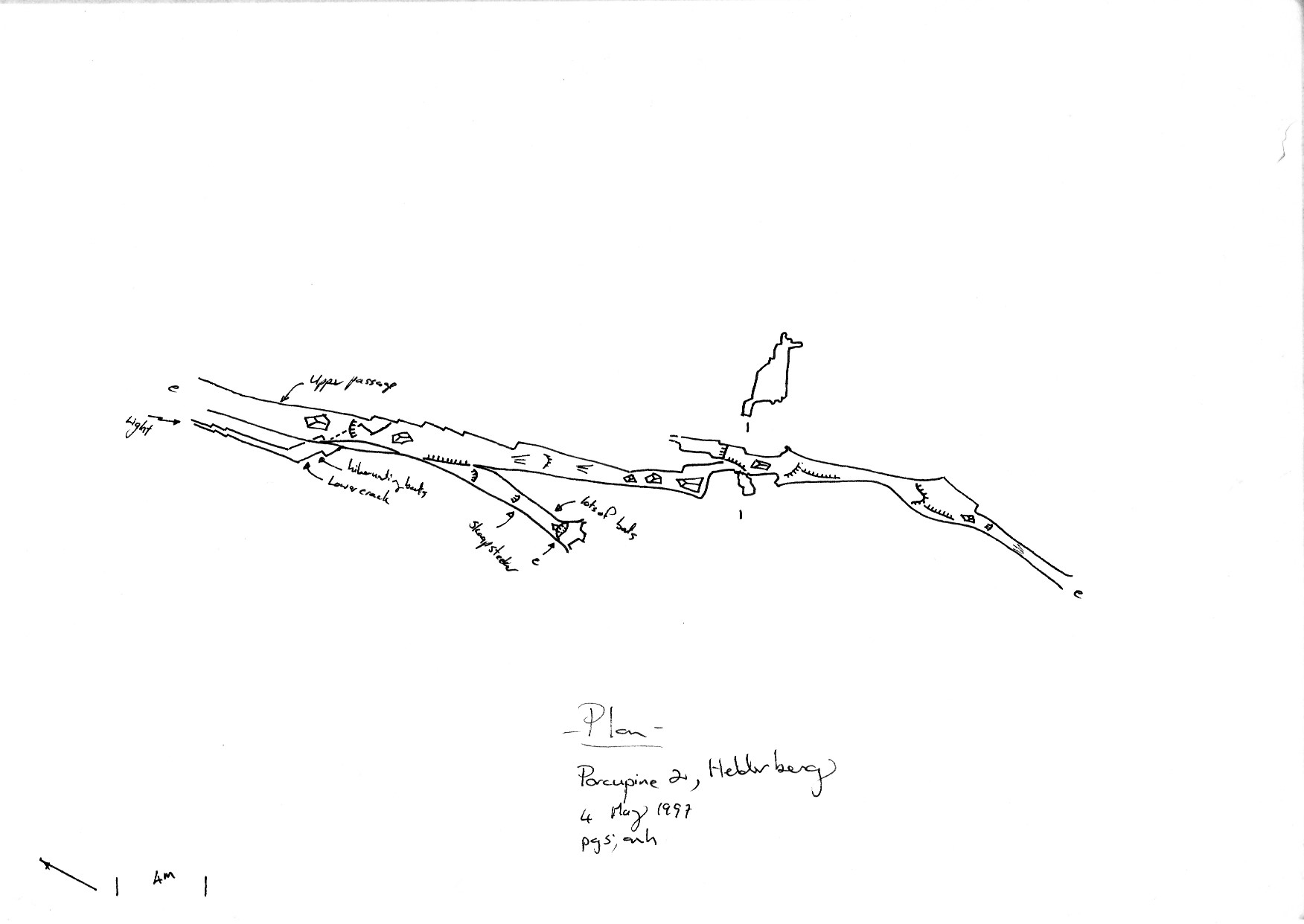
A steep, narrow gully leads up to the entrance of Cave 2. The floor then drops off into the first chamber. The passage is a cleft shaped vertical slot with an average width of about 1.5m and the ceiling is about 5m high. The walls of the cave are very loose and crumbly, and potentially dangerous. The route leads over a boulder pile to what appeared to be a terminal chamber, about 15m from the entrance.
Both walls of the cave are decorated with silica nodules. The eastern wall looks as though concrete has run down the wall. This is probably silica cement, and is similar to the material which occurs in Ghost Frog Cave in Ash Valley on Table Mountain. Shiny black crystals, less than 1mm in diameter, and about 1cm long have formed in places on the western wall. In some places white crystals have also formed, but the white crystals are much shorter than the black ones. The white crystals were later identified as gypsum.
A staircase of unstable rock leads from the top of the boulder pile, through a boulder choke, into a small chamber in the ceiling. Just past this chamber, we found a colony of small, black insectivorous bats. Probably Miniopterus. Although it appeared that we had disturbed some from sleep, most seemed very active, long before we reached their roost. The passage follows the direction of the crack for another 20m to a second entrance. We found a solitary, sleeping horseshoe bat at this end of the cave.
Before the second entrance is reached, a gap in the ceiling leads up into a higher level in the rift. At this point, we were greeted by a 50cm long, grey snake, with black edged, brown diamonds down its back. It had obviously recently dined well judging by the bat sized lump in its middle. We climbed the shaft for a further 12m, and reached a third entrance, which is about 30m above the lower entrance. The vertical passage appeared more unstable as we climbed higher. There were large boulders and plenty of loose soil The ceiling of this shaft provided an ideal roosting place for bats and we saw some large fruit bats in the upper reaches of this part of the cave. Climbing up and out proved easy as there were plenty of foot and handholds. This cave must nevertheless be entered with great care as the potential for collapse is good. From the top exit it is possible to link up with the mountain path and descend to the base of the cliff. The survey shows the cave to be 39m long and 30m high.
Survey Plans
-
🗎 Helderberg_2_Skaalsteeker_Bat_Cave_[Survey][19970504][60m][5D].pdf
-
Helderberg 2 Skaalsteeker Bat Cave Plan[Survey][19970504][60m][5D][Incomplete].jpg