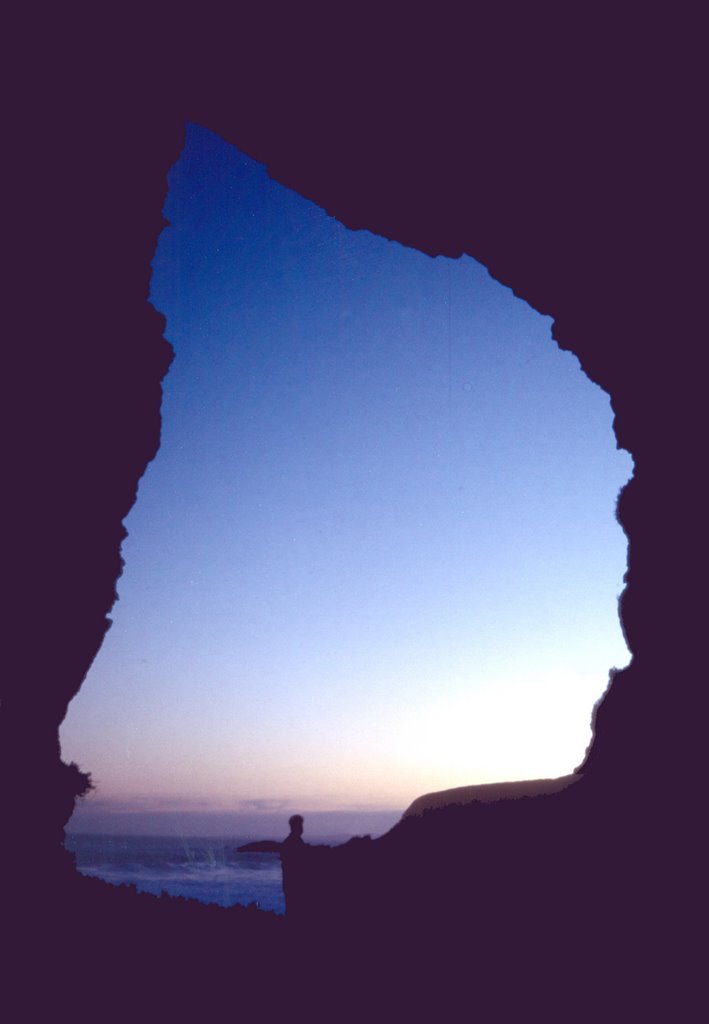
Mossel Bay Bamboesgat Guano Cave
Peter Swart and Anthony Hitchcock, February 1998
On the eastern side of the beach called Bamboes Gat is the most impressive cave on this stretch of coast. Guano Grot has a 10m high by 10m wide entrance and is approximately 7–10m above sea level. The main direction of the cave is perpendicular to the coastline. Piles of sharp-edged rocks, which appear to have been gathered into pits and mounds, cover the floor. As the cave is well above the current water level, calcite formations derived from the limestone capping have formed in the back of the cave. No large formations are present, but a thin layer of calcite covers the wall in places, and very old, dry flowstone occurs on the wall in the first side passage.
In the back of the cave are a few conglomerate boulders formed from very dry, soft, dusty cement filled with small plates of quartzitic rock (approximately 50mm × 50mm × 5mm thick).
Where the cave begins to narrow, a few hibernating horseshoe bats were found. The guano on the floor was very dry and covered in small beetles and black mites. A swarm of midges occupied this section of the cave, and a pair of rock pigeons was nesting near the ceiling just inside the dark zone. The only other evidence of life was the desiccated remains of a dog.
The area is a very popular fishing spot and there are a number of fireplaces around the cave entrance. Apart from these, there was very little evidence of human interference in the cave itself. Stone tools found in the rocky debris below the entrance suggest the area has been inhabited for quite some time.
On the eastern side of the Guano Cave headland is a small open cave approximately 15m deep and 5m wide, named Guano Back Door. There is no connection between the two caves.
Survey Plans

Photos