Vlêrmuis Kloof Cave
Boskloof
Authors: Anthony Hitchcock, Stephan Moser, Peter Swart
Date: October 2009
Introduction
Vlêrmuiskrans Cave, on the farm Boskloof near Stanford, was first brought to our attention by Ross Turner, who regularly visits the farm. Anthony Hitchcock contacted the owner, Thys de Villiers, who invited us to visit the cave.
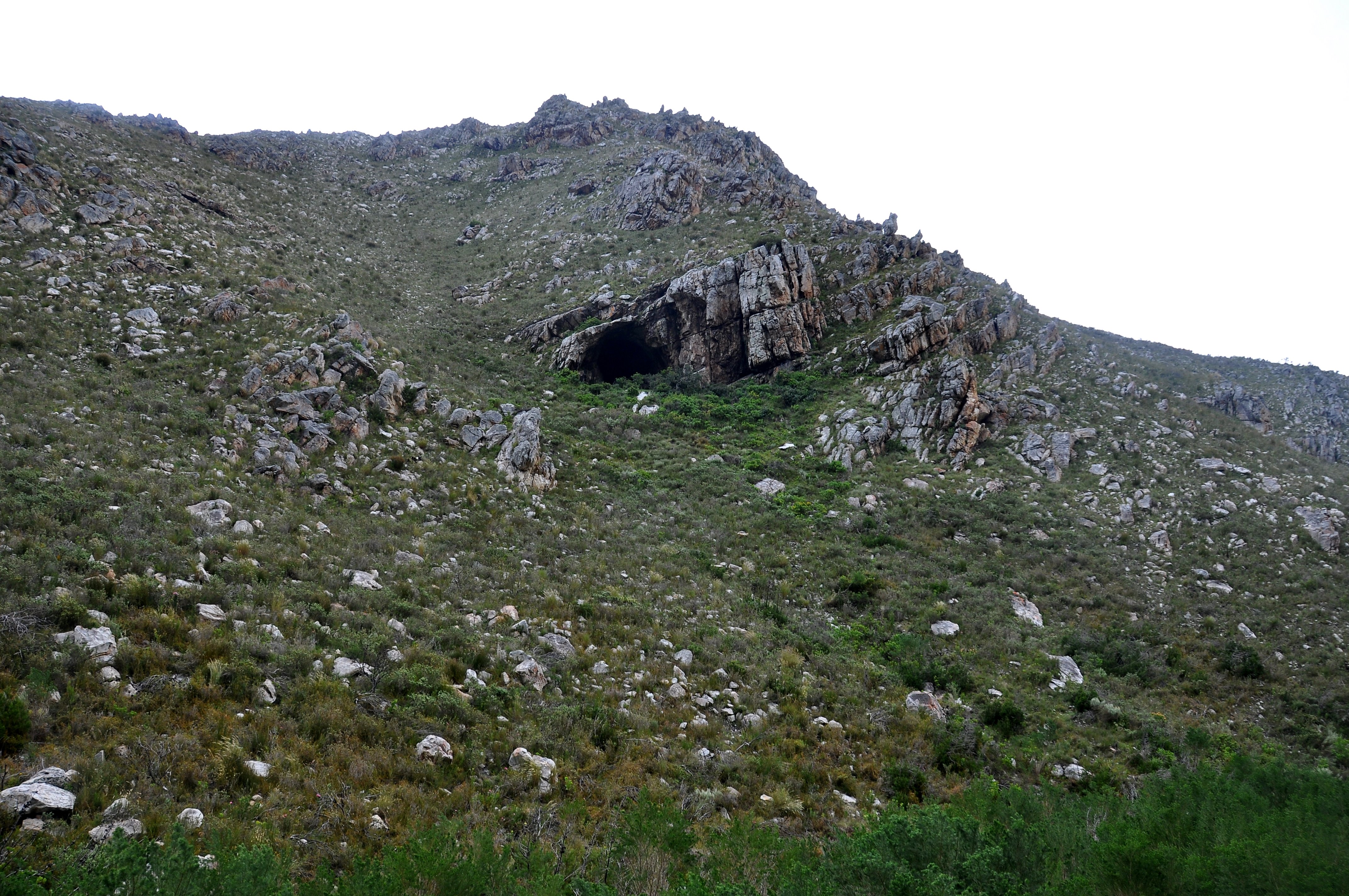
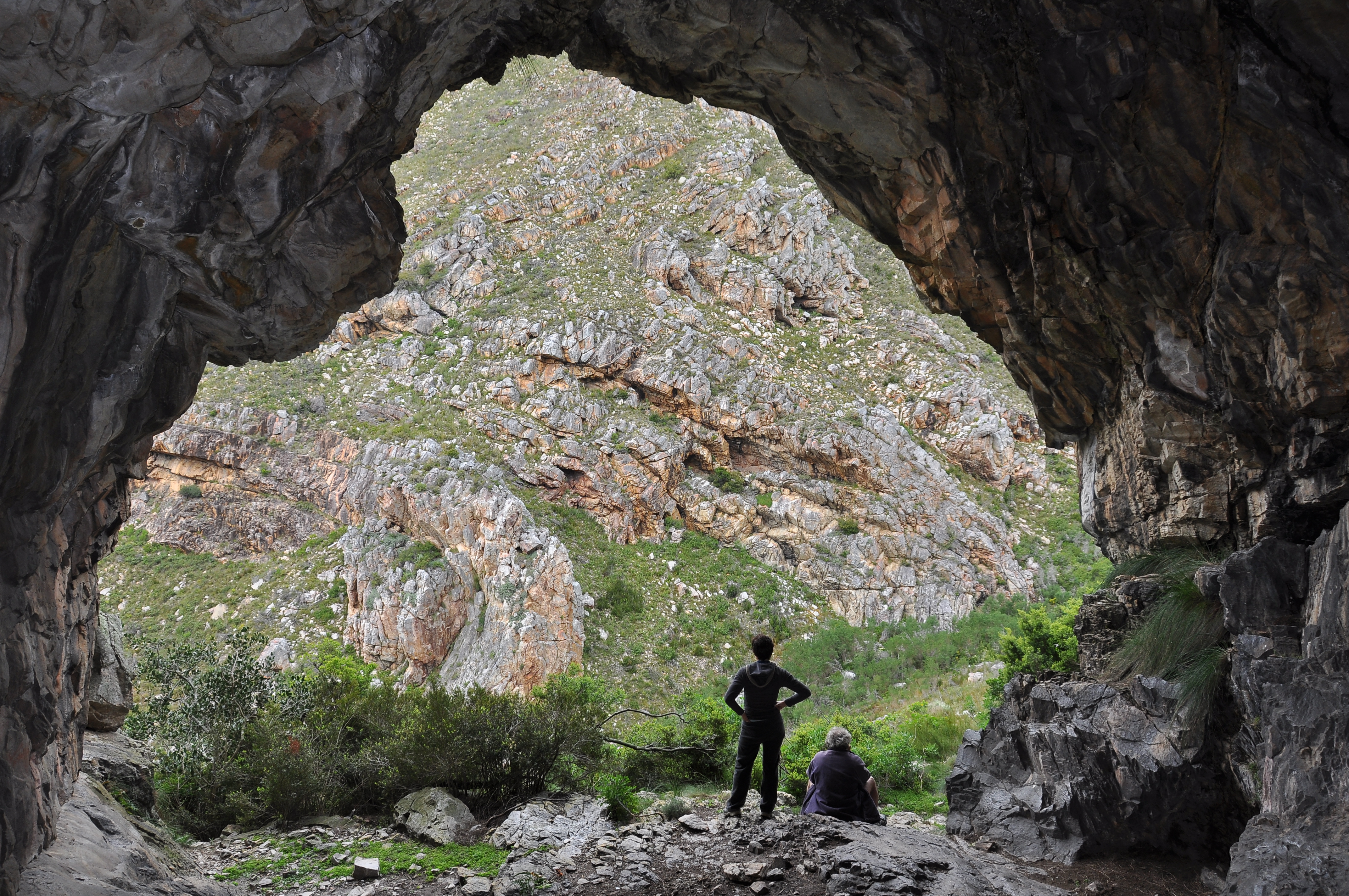
Figure 1 – Vlêrmuiskrans Cave, Boskloof Farm, Stanford.
During August 2009, we surveyed the cave, and superficially noted the bats and invertebrates. During a subsequent visit during September 2009, we captured and attempted to identify bats, and took samples of spiders, beetles and a caterpillar for identification.
Cave Description
The cave occurs in a well folded quartzitic rock of the Akkedisberg near Stanford.
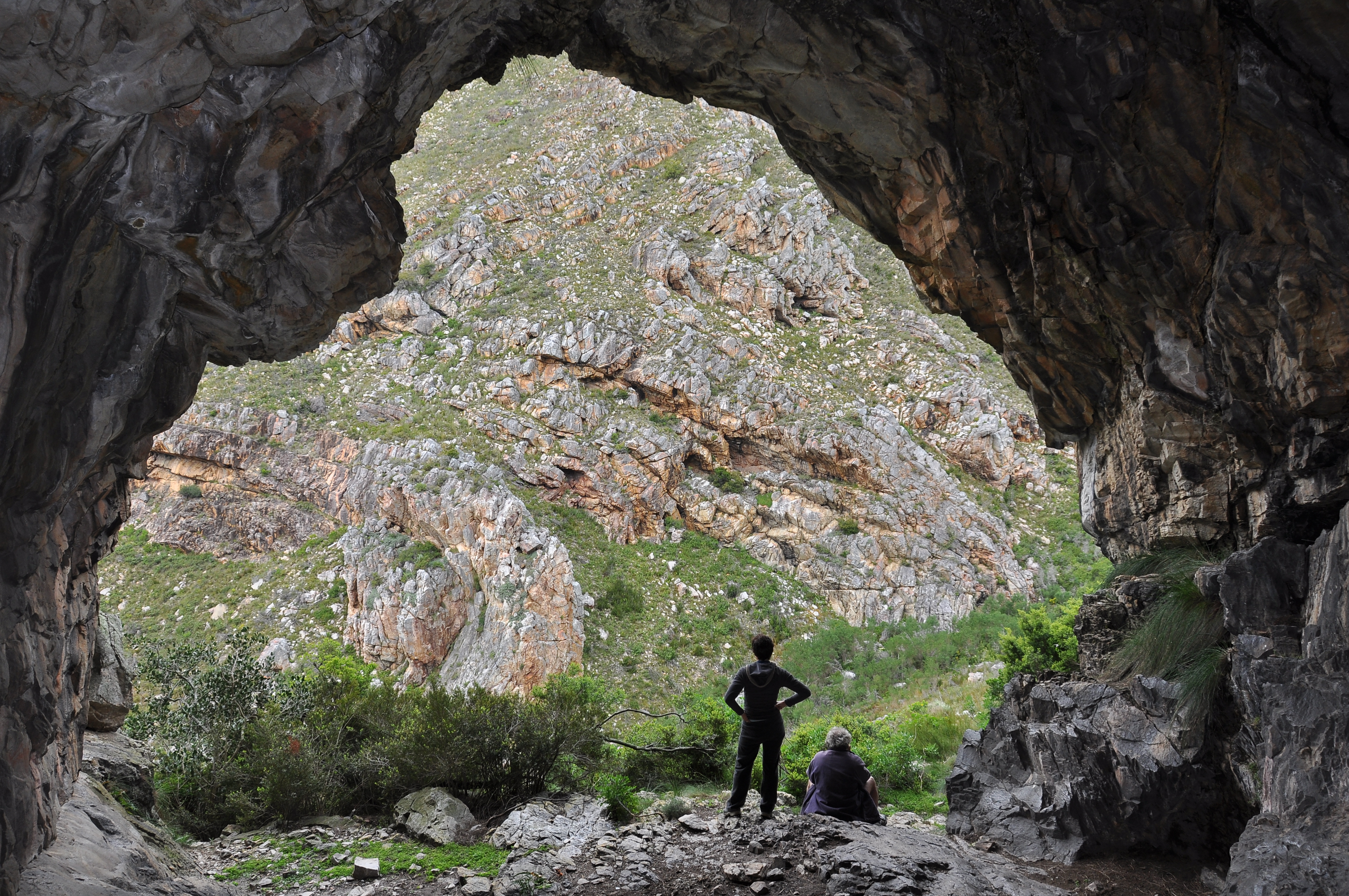
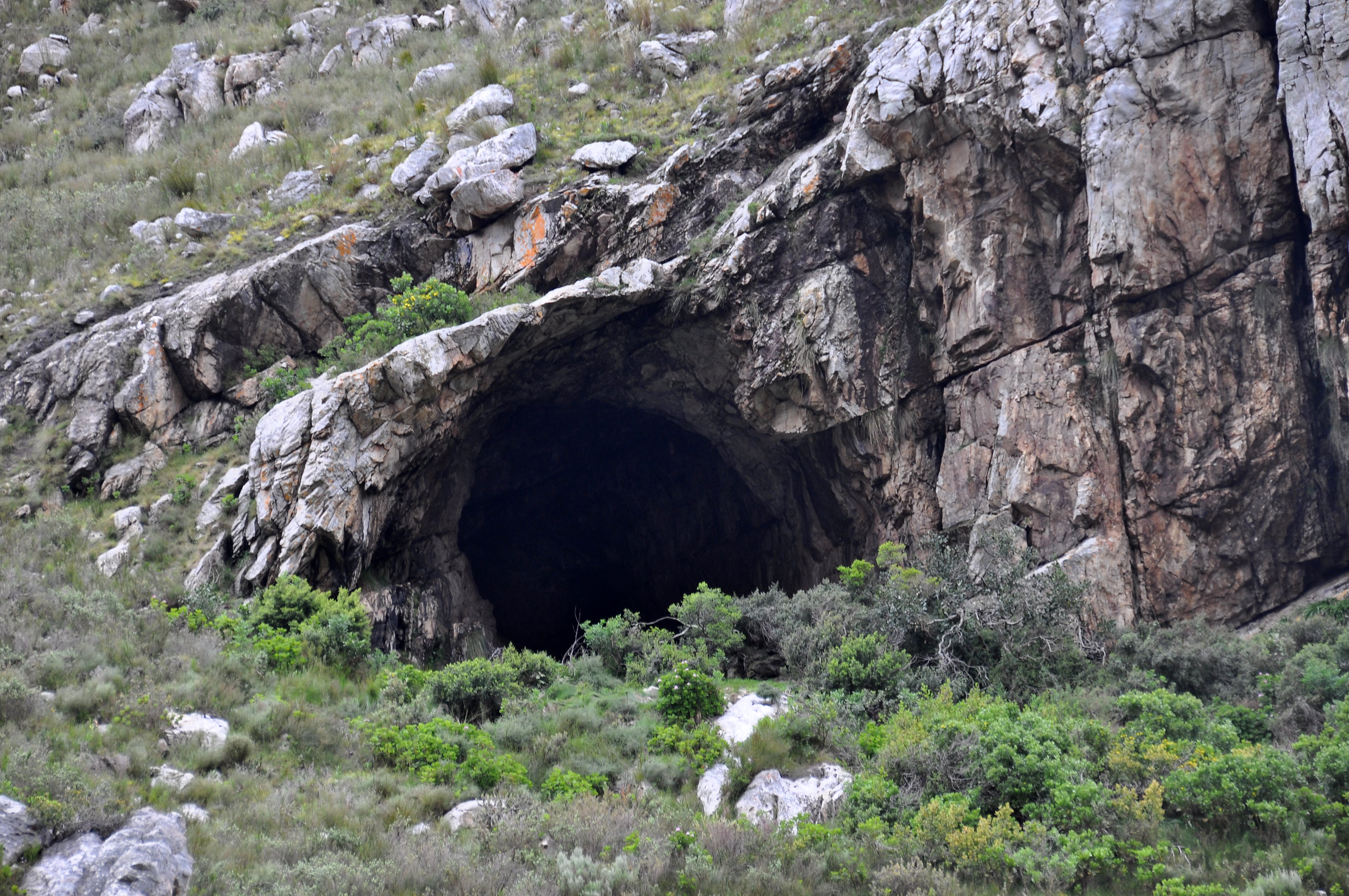
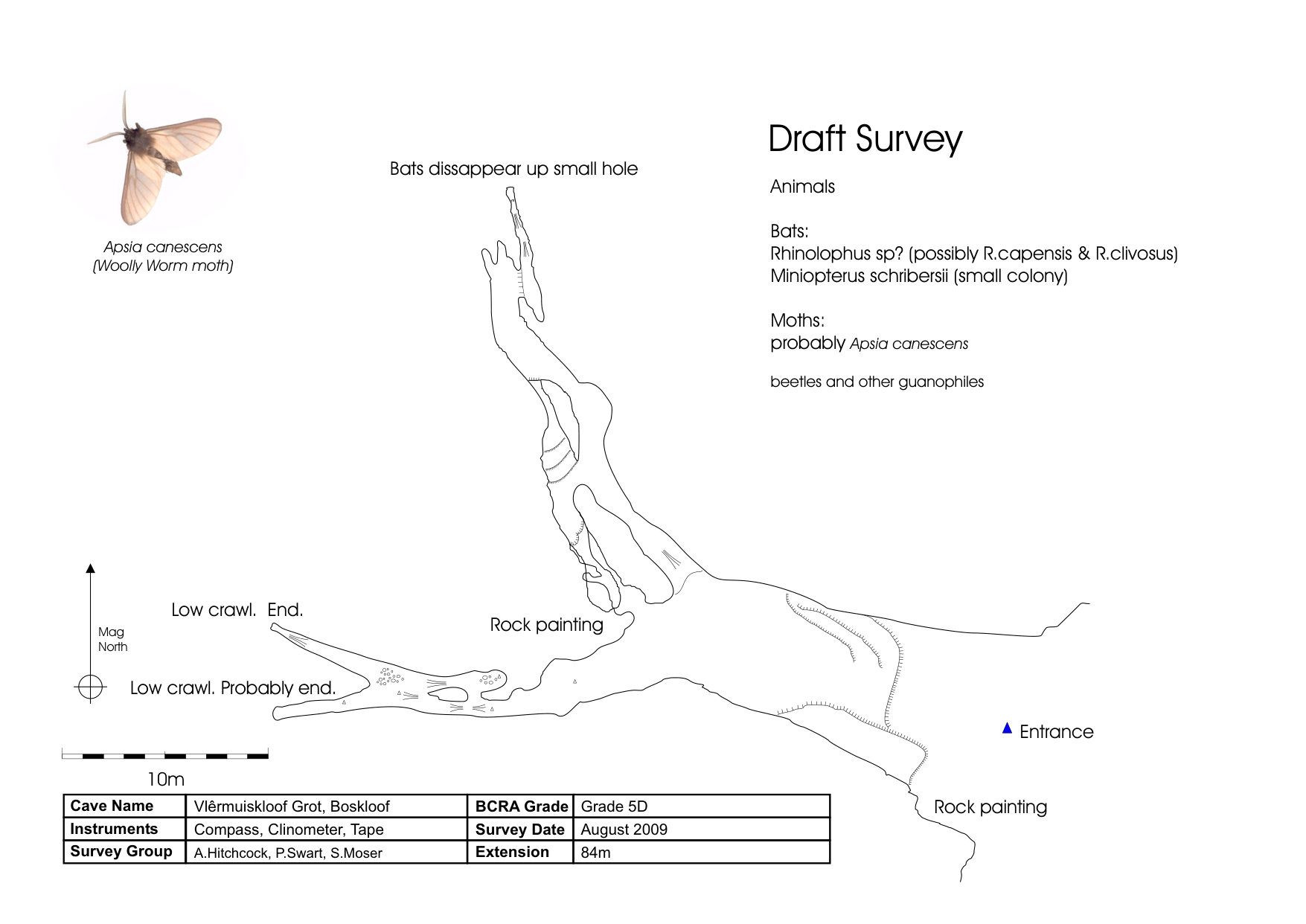
The cave has a large, arched entrance, approximately 8 m high by xxx m wide. The floor of the entrance chamber slopes up towards the back where it becomes low, and splits into three passages.
The left hand passage is low and level, and extends into the mountain westwards for approximately 10 m–12 m. Along parts of the passage walls there appears to be a tide mark approximately 30 cm from the floor. This passage again splits into two. The left hand fork appears to terminate, and the right hand fork gets very narrow and slopes upwards. It appears that dark mud has been washed down this passage and stained the solid rock floor.
From the entrance chamber, the central and right hand passages head in a northerly direction, and join in a small chamber approximately 6 m from the entrance chamber. The floors of both of these passages are covered in dry bat guano at least 30 cm deep. Two passages lead from this chamber. Towards the south, an upper passage leads back towards the entrance chamber. This terminates in a small chamber, approximately 1.5 m wide by 1.5 m long. The clusters of Miniopterus bats and some of the Rhinolophus bats appeared to favour this upper chamber.
Towards the north, a low crawl leads to the base of a higher vertical crack. The Rhinolophus bats flee to this part of the cave when disturbed, and disappear up a small hole at the top of this crack.
Minerals
Apart from the large quantities of bat guano, there are white slimy deposits on the walls. From a distance, these appear to be calcite, but actually consist of a white slimy substance.
Archaeology
Paintings
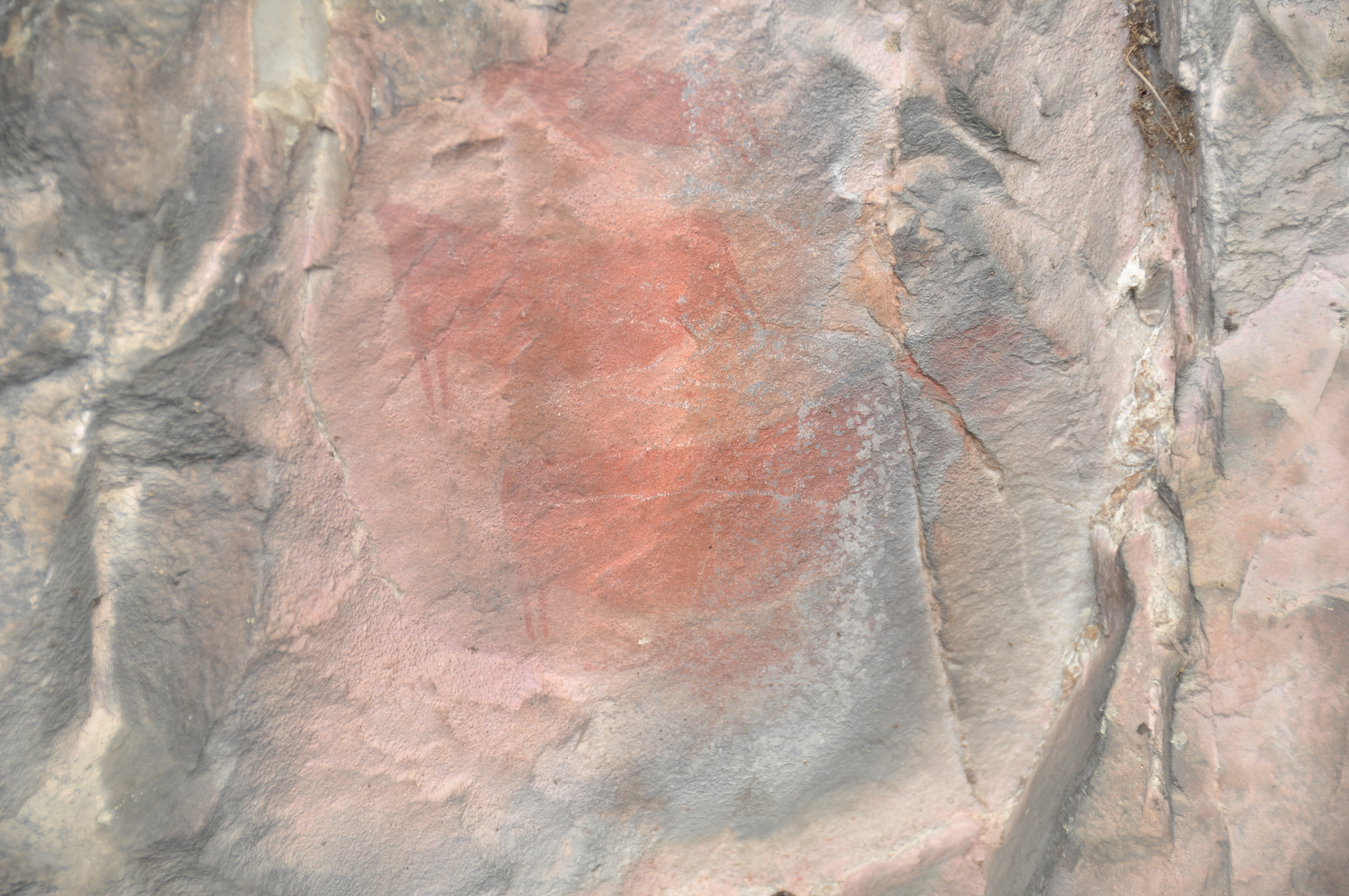
Figure 2 – Faded painting of three Eland at the entrance of the cave.
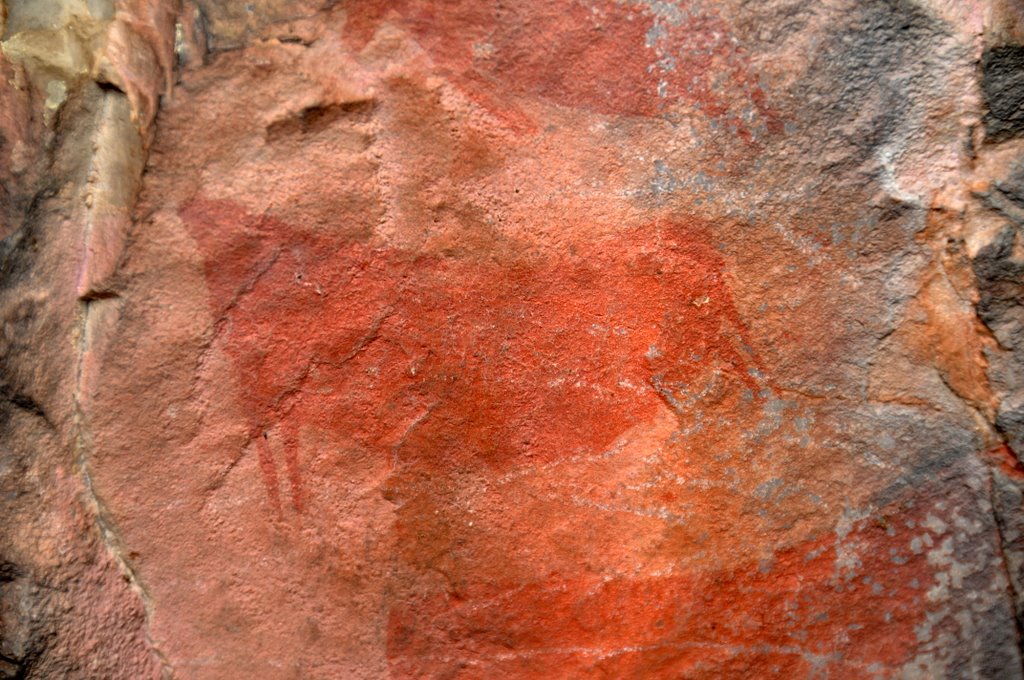
Figure 3 – Contrast enhanced image of the central Eland.
Geology
Cape Fold Belt Quartzite
Fauna
Mammals
Bats
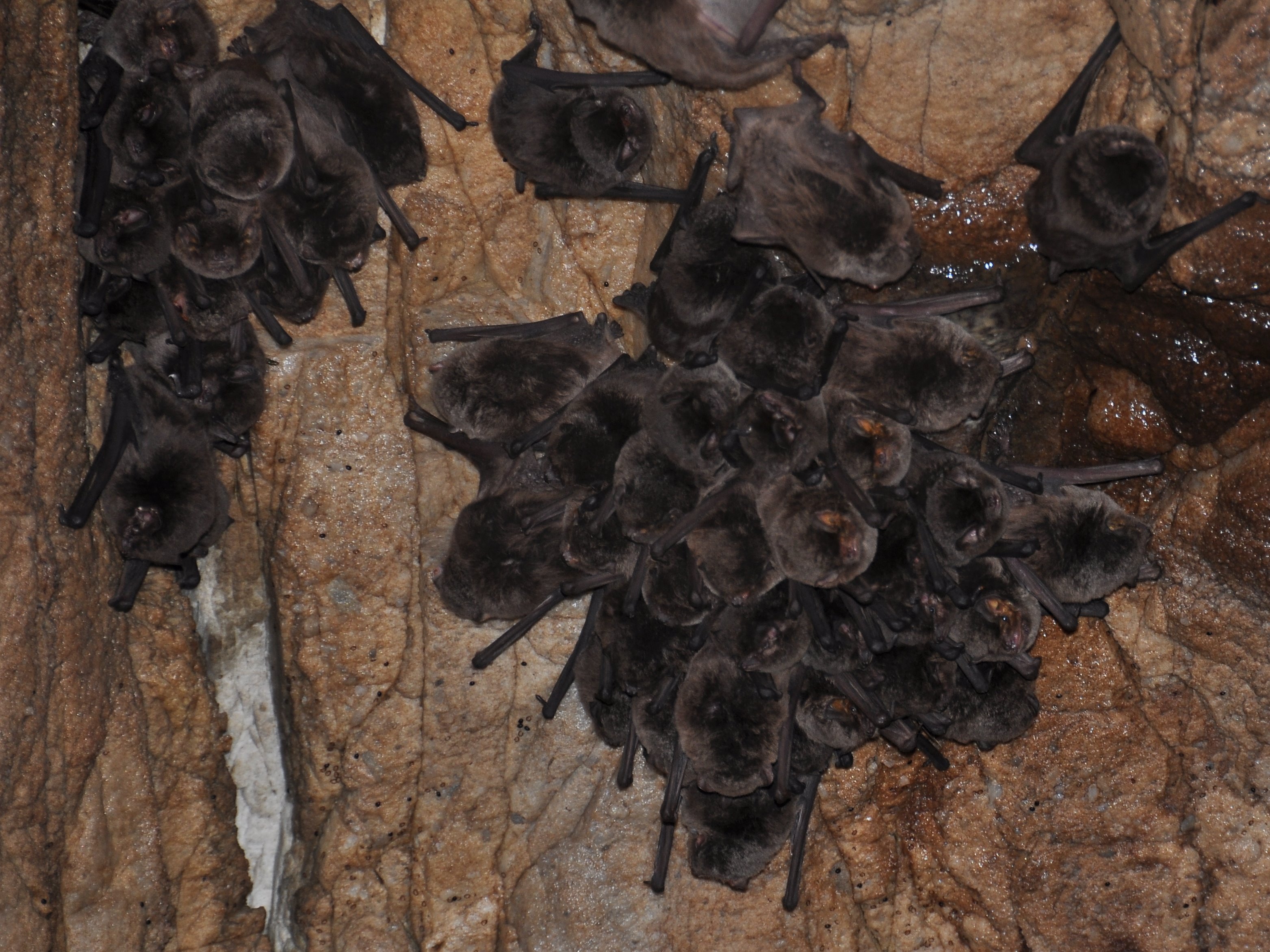
There is a bat roost in the right hand chamber of the cave. The number of bats in the cave fluctuates through the year, but no study has been made of the cycles. During our visits, there were approximately 100 Miniopterus, and probably between 50 and 100 Rhinolophus. The Miniopterus were counted by taking photographs of the clusters of bats, and counting the bats, so the count is reasonably accurate. As the Rhinolophus do not cluster, and were very active when we visited, counting them was very difficult.
Six bats were captured using a handheld net, and forearm (F/A) measurements were taken.
| Genus | F/A | Gender | Probable Species |
|---|---|---|---|
| Miniopterus | 46mm | Male | schreibersii |
| Miniopterus | 46mm | Male | capensis |
| Rhinolophus | 48mm | Male | capensis |
| Rhinolophus | 48mm | Male | capensis |
| Rhinolophus | 48mm | Male | capensis |
| Rhinolophus | 50mm | Male | clivosus |
Forearm Measurements (26 September 2009)
No bats were found in the low, left hand passage.
Locations
Rhinolophus
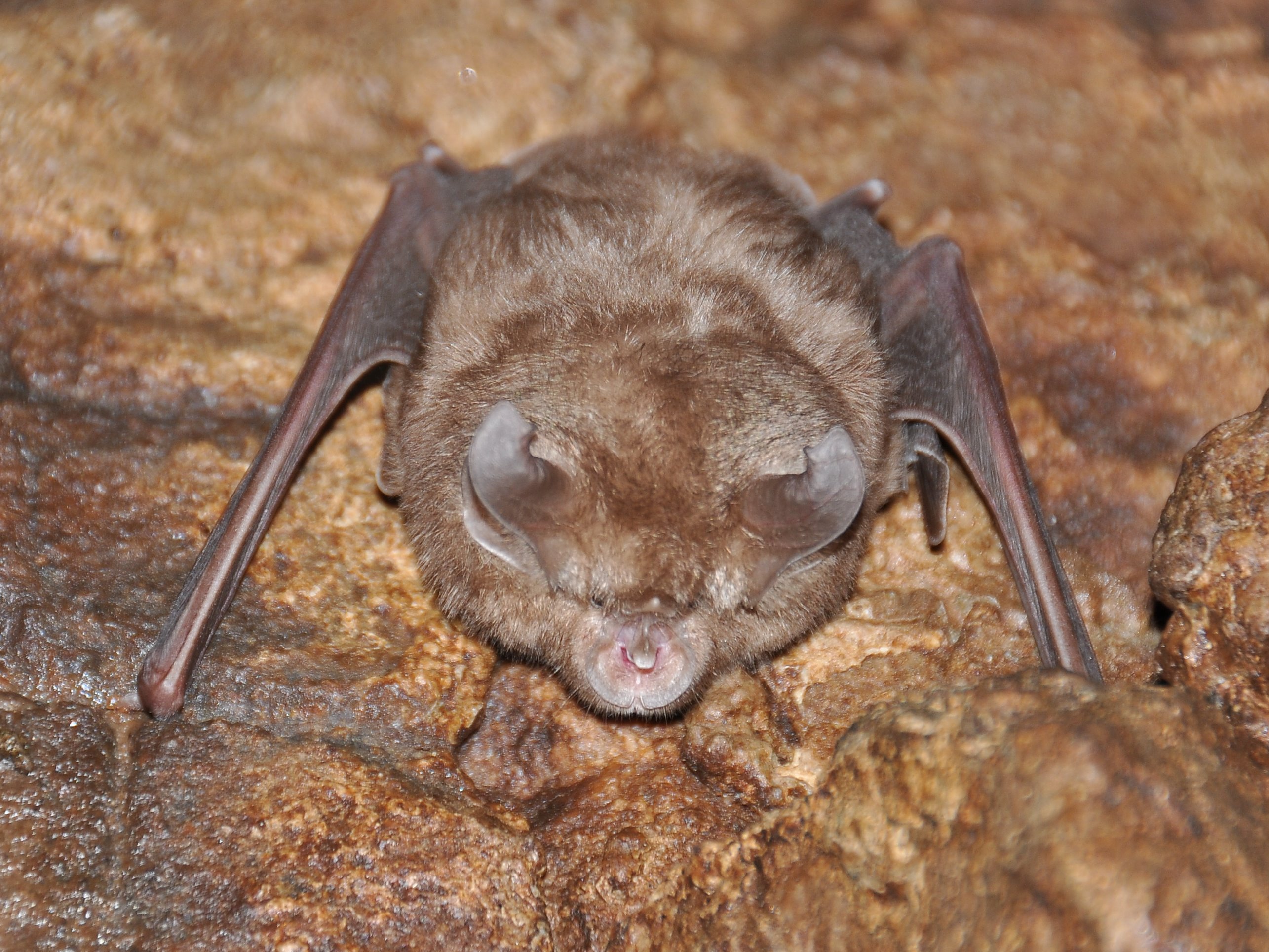
Miniopterus schreibersii
Invertebrates
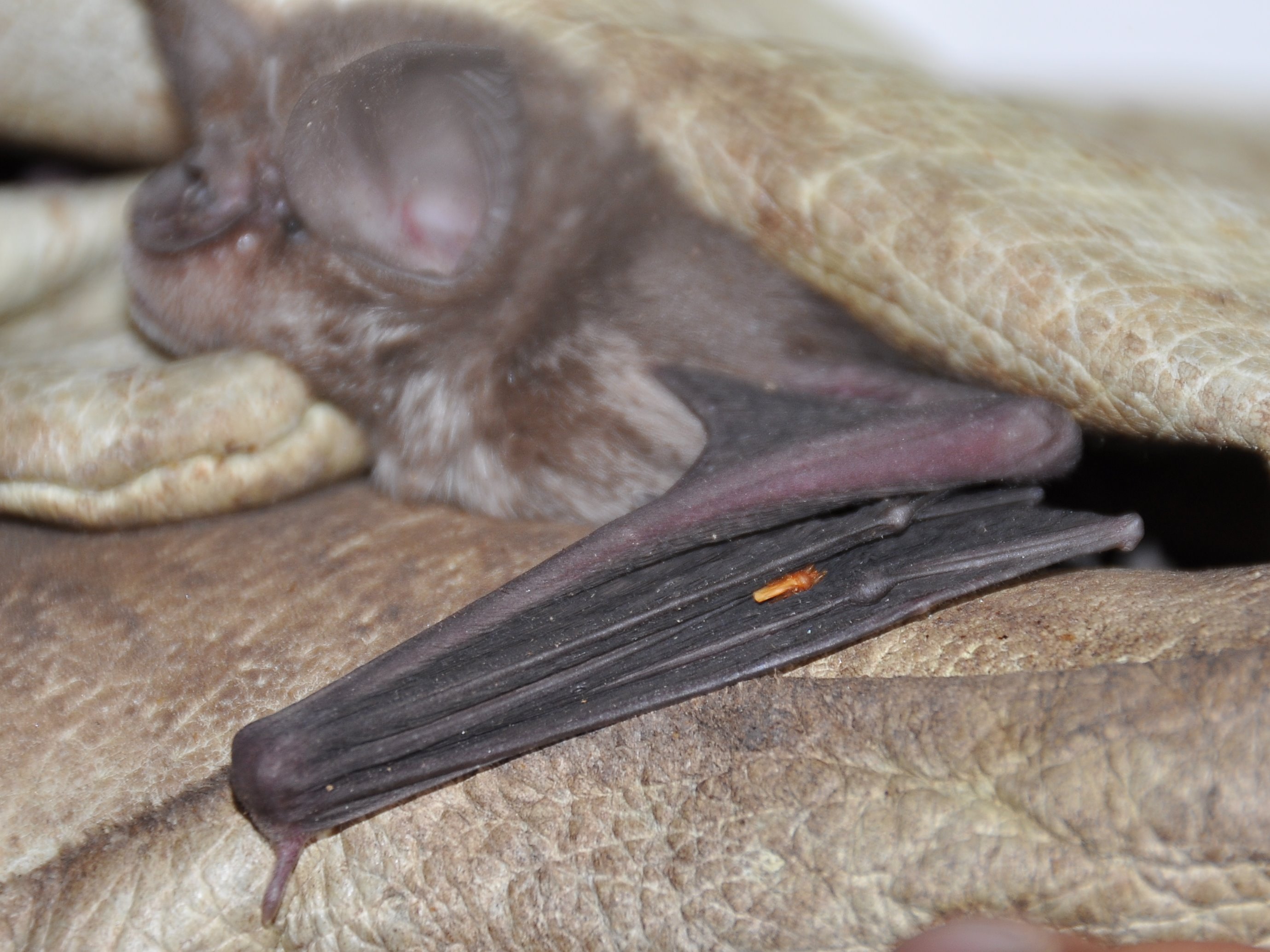
Bat Parasites
Moths & Caterpillars
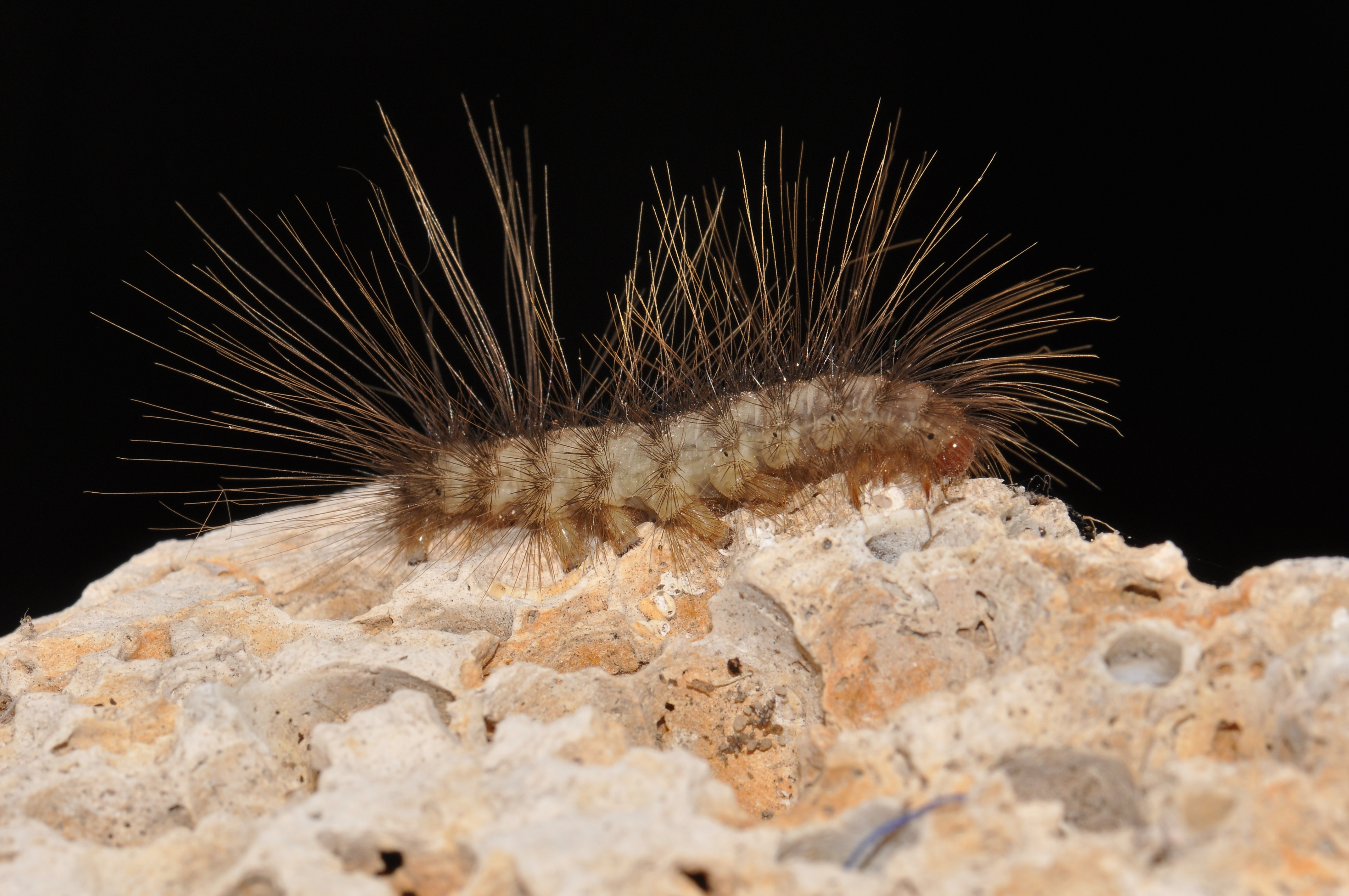
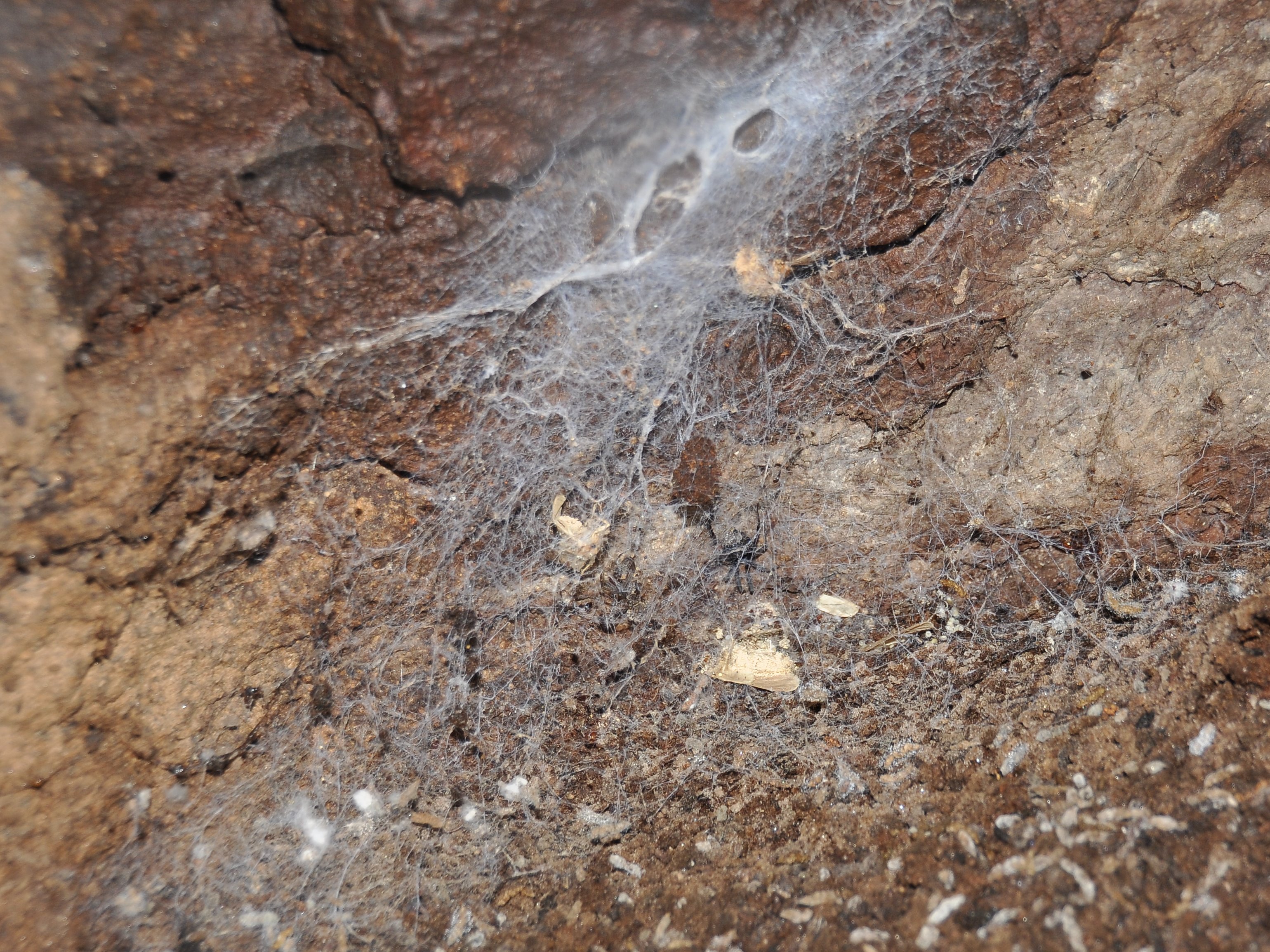
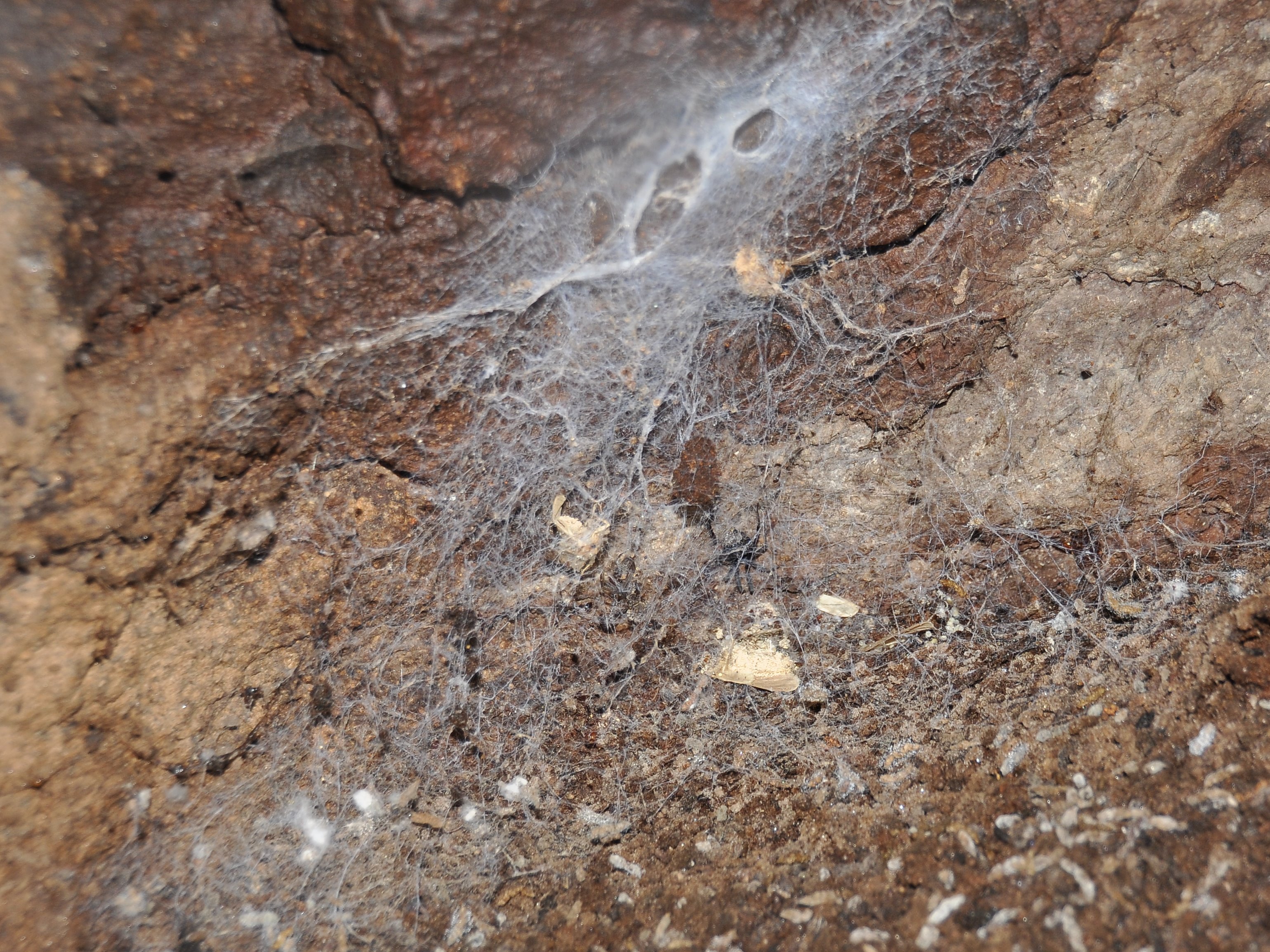
As with many of the caves along the southern cape coast, the moth Apisa canescens occurs in Vlêrmuiskloof Cave. There were a number of dead moths in the spider's web, and a few caterpillars on the floor of the cave.
Beetles
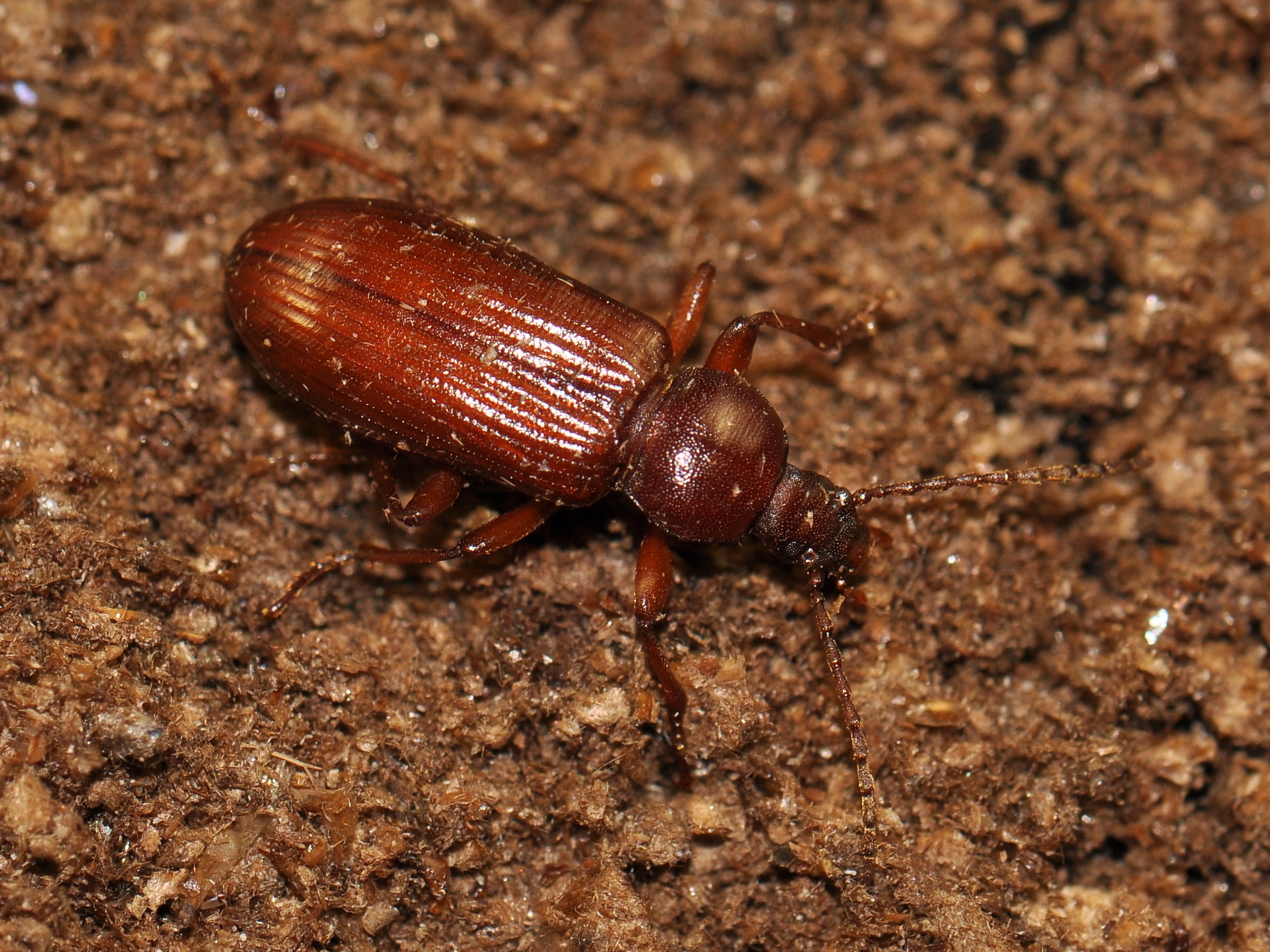
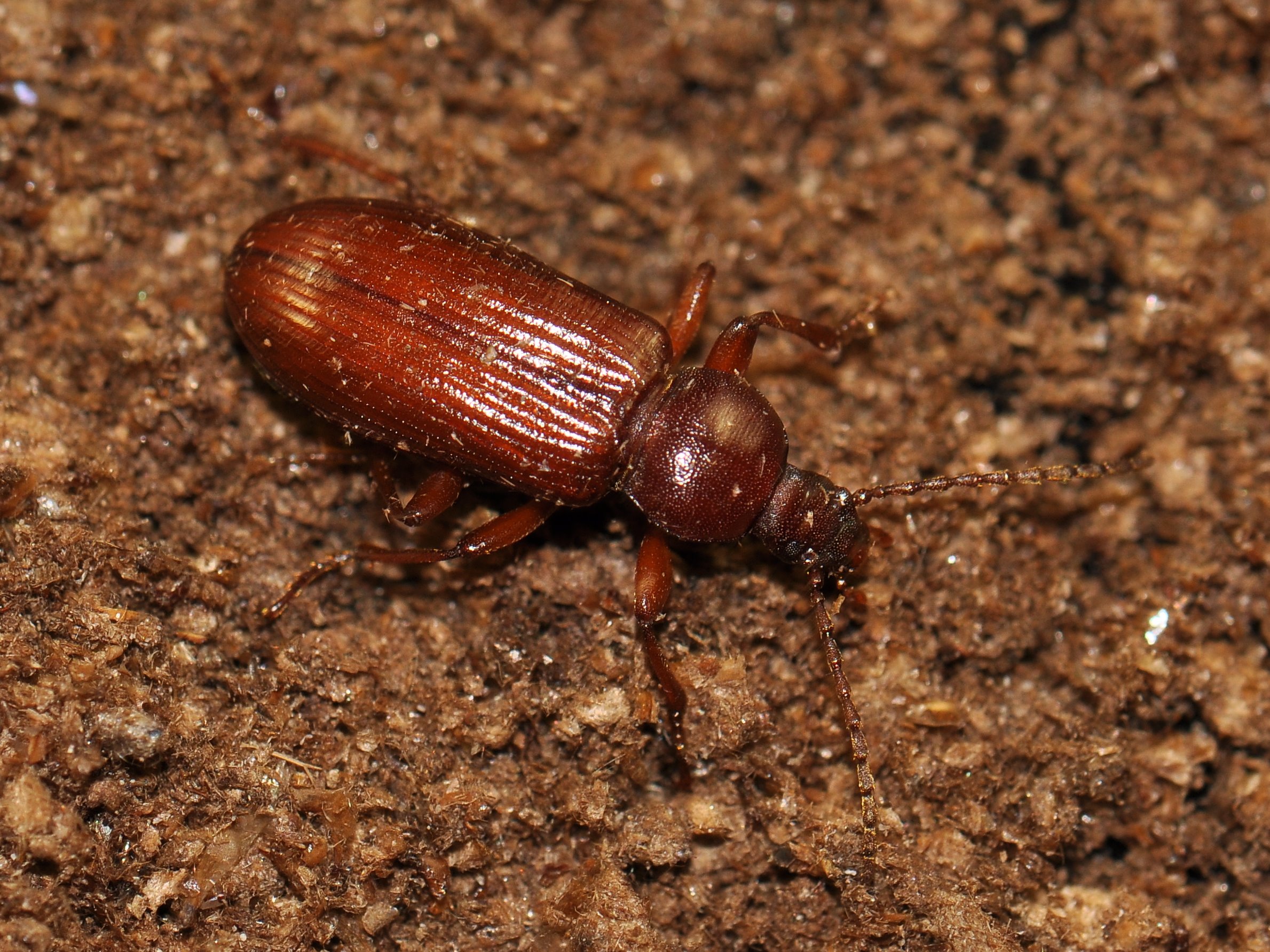
Foraging in the upper layers of the bat guano were beetles of the family Tenebrionidae. These were fairly common, and very easy to catch. Samples of the beetle were sent to the Transvaal Museum for further identification. According to Dr Mike Picker, UCT, these are possibly a new species.
Spiders
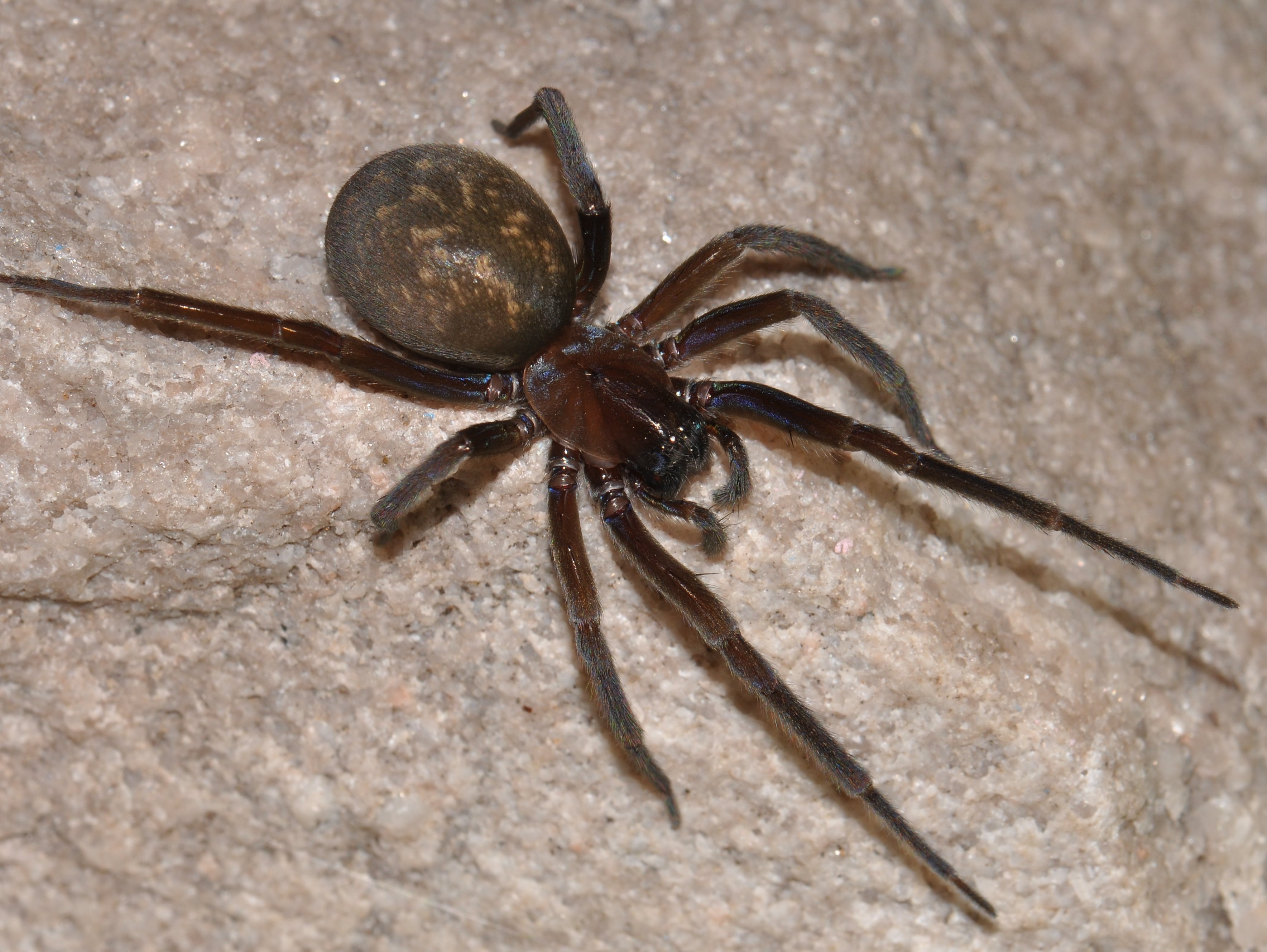
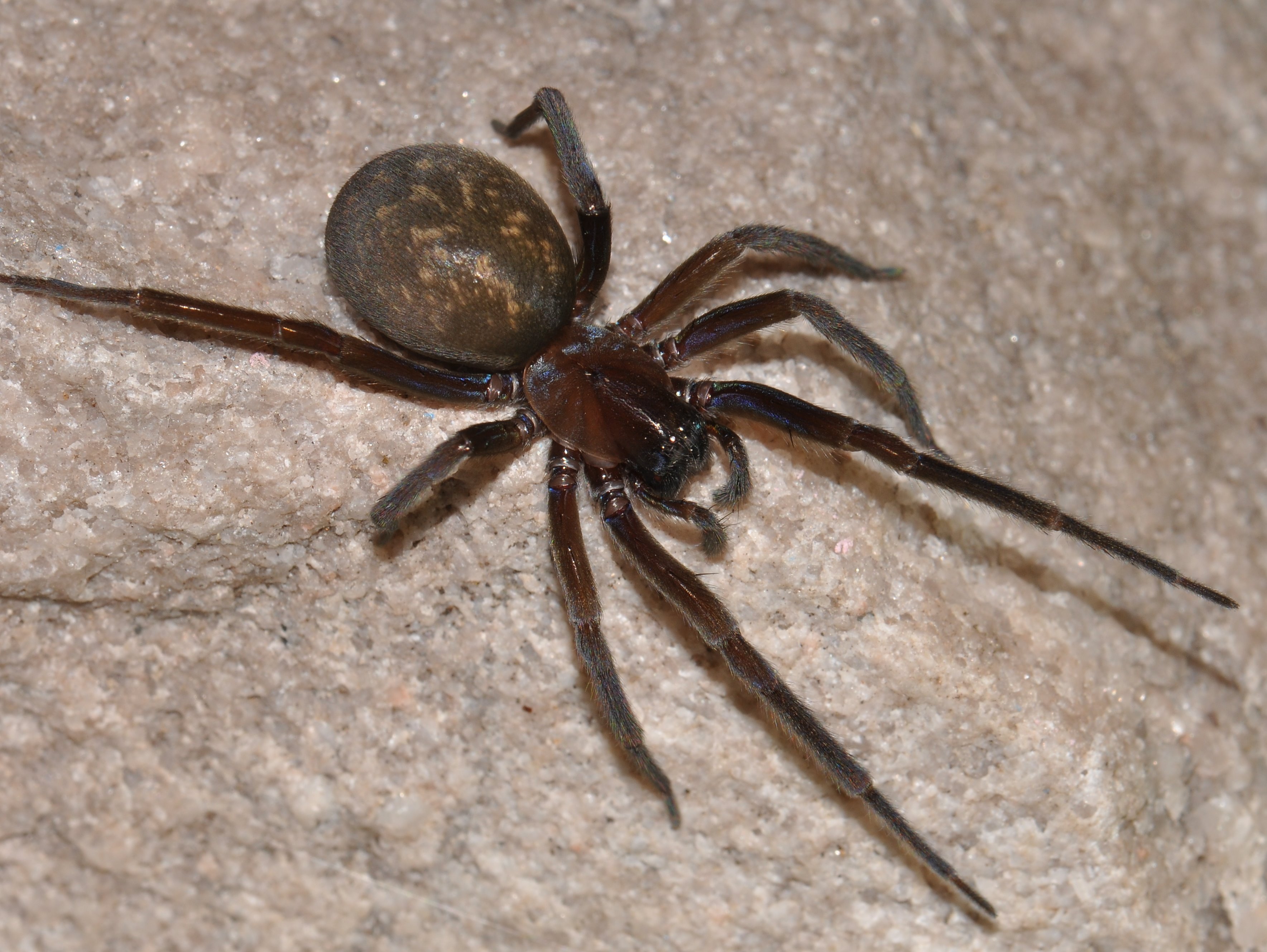
Two spiders were collected. According to Norman Larsen, both probably belong to the family Phyxelidinae. Samples have been sent to Iziko for further identification.
The spider is similar in appearance to Malaika longipes, which also occurs in caves and dark places.
The spiders make messy looking webs, close to the cave wall. Some of the larger webs contain funnel-like structures.
Conclusion
Location and Contact Details
Owner: Thys de Villiers, Boskloof Farm, Stanford.
References
Picker, M., Griffiths, C., Weaving, A. Field Guide to Insects of South Africa (Struik, 2002). Apisa canescens p352 no 5.
Larsen, Norman, pers. comm.
Survey Plans
Photos