Find a Bug
Desktop Version
Find a bug - No Legs (On land, in soil)
| Common Name | Scientific Name | Photo | Description | Where | iNat |
|---|---|---|---|---|---|
| Typical Earthworms | Order Crassiclitellata | 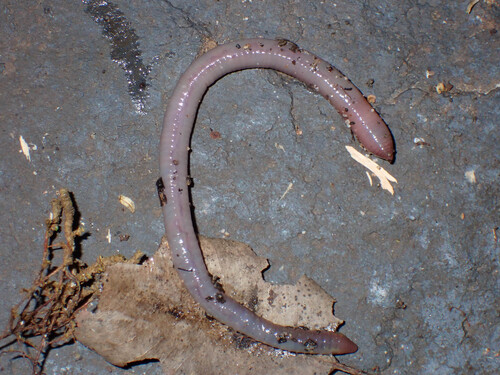 |
Seqmented worm found mostly in the soil, sometimes in water. | In or on soil, occasionally in water. Usually near entrances. | iNat: 316347097 |
| Typical Earthworms | Order Crassiclitellata | 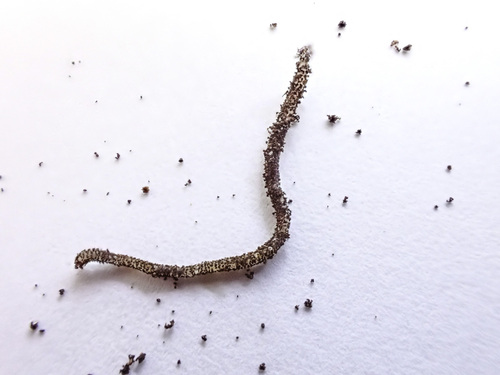 |
Seqmented worm found mostly in the soil, sometimes in water. | In or on soil, occasionally in water. Usually near entrances. | iNat: 202853814 |
| Land Planarians | Subfamily Microplaninae | 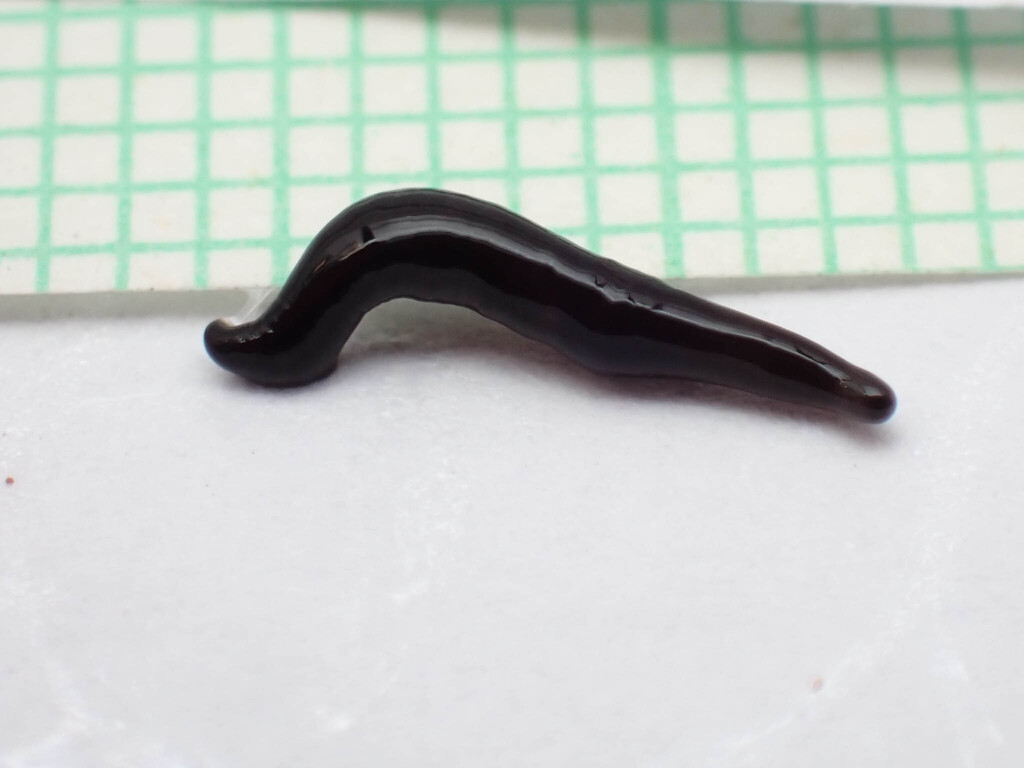 |
Unsegmented, squishy, can expand and contract a lot. | On rock walls | iNat: 316352660 |
| Land Planarians | Family Geoplanidae | 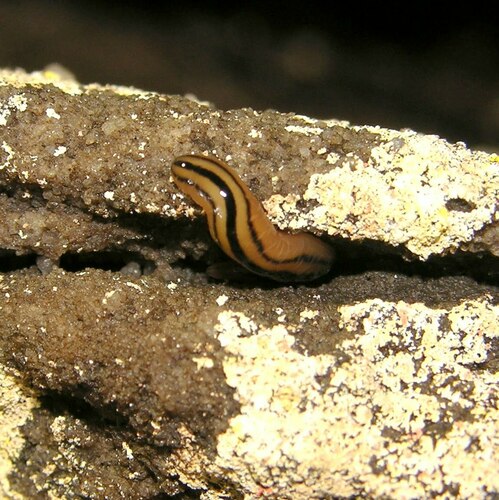 |
Unsegmented, squishy, can expand and contract a lot. | On rock walls | iNat: 179216828 |
| Tollin's Pinwheel Snail | Trachycystis tollini | 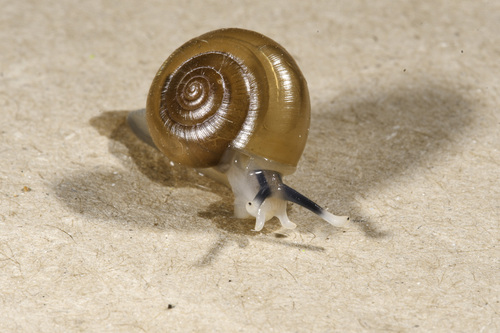 |
A small land snail with a flat, disc-like shell endemic to southern Africa; found sheltering deep in cave passages. | Found deep in the dark zone of caves. | iNat: 204802495 |
| Pinwheel Snail | Trachycystinae | 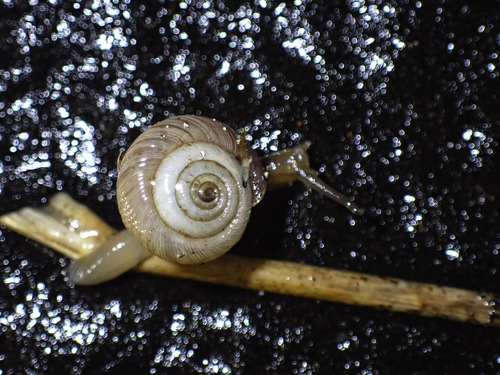 |
A subfamily of tiny land snails characterised by flat, low-spired, disc-like shells; restricted to southern Africa. | Found near cave entrances. | iNat: 186056661 |
| Dwarf Cannibal Snail | Nata vernicosa | 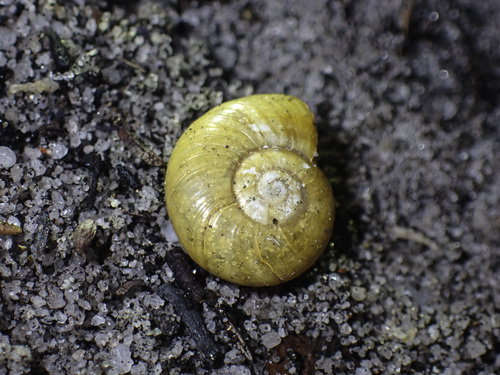 |
A tiny predatory land snail that actively hunts and consumes other snails, despite its diminutive size. | Found deep in the dark zone of caves. | iNat: 216884247 |
| Charybdis Land Snail | Cyclocystis charybdis | 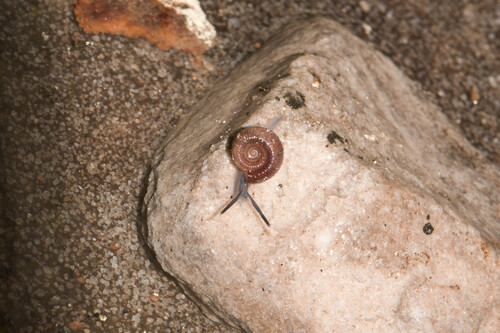 |
A South African land snail whose species name alludes to the mythological whirlpool Charybdis, referencing its tightly coiled spiral shell. | Found deep in the dark zone of caves. | iNat: 267526931 |
| Variegated Semi-slug | Ariopelta variegata | 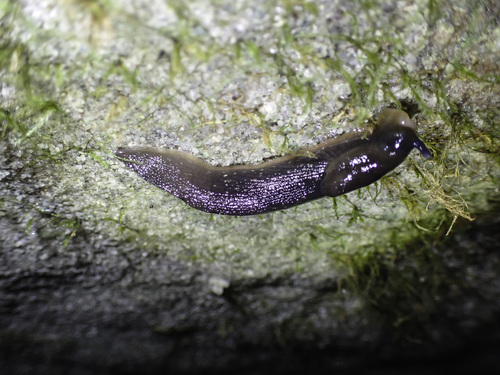 |
An oopeltid semi-slug endemic to the Western Cape mountains; retains a small external shell, unlike true slugs, and shelters in damp cave entrances. | Found near cave entrances. | iNat: 220522436 |
Two legs (and wings)
Not bugs, but found in caves.
| Common Name | Scientific Name | Photo | Description | Where | iNat |
|---|---|---|---|---|---|
| Natal Bent-wing bat | Miniopterus natalensis | 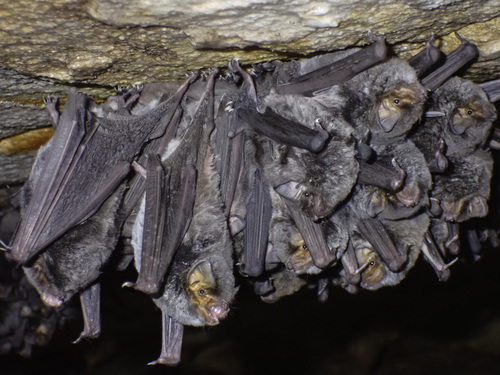 |
Smallish bat, often roosts in large numbers. | Usually quite deep into the cave. | iNat: 204146424 |
| Geoffrey's Horseshoe Bat | Rhinolophus clivosus | 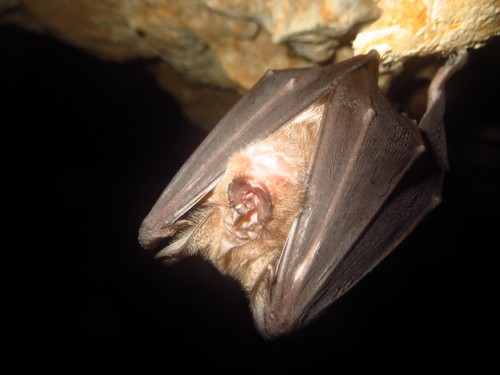 |
Medium sized bat, light coloured tummy, distinctive U shaped nose | Usually deep in the cave. | iNat: 37450578 |
| Cape Horseshoe Bat | Rhinolophus capensis | 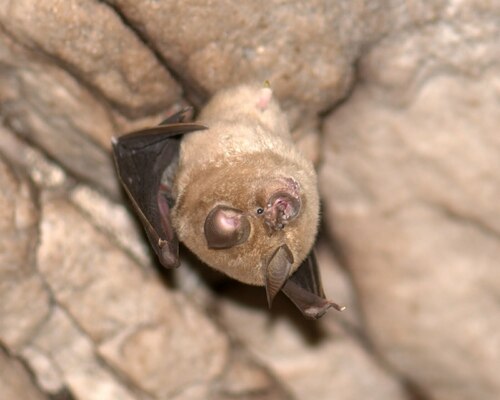 |
Very difficult to tell apart from R.clivosus | Usually deep into the cave. | iNat: 205718765 |
| Egyptian fruit bat | Rousettus aegyptiacus | 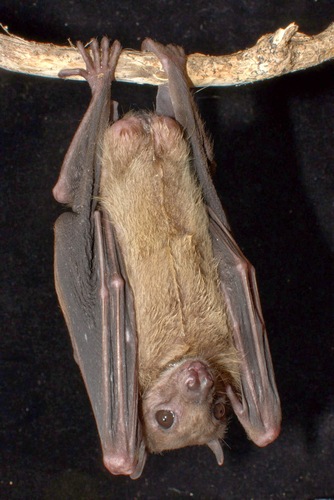 |
Large bat, 150mm long. Big eyes | Usually found close to the entrance, or just into the dark. | iNat: 179213289 |
Four legs
Although not bugs, frogs are often either washed into caves or seek the cool damp climate of caves. Both Heleophryne species are often found climbing up nearly vertical cave walls.
| Common Name | Scientific Name | Photo | Description | Where | iNat |
|---|---|---|---|---|---|
| Common name | Breviceps montanus | 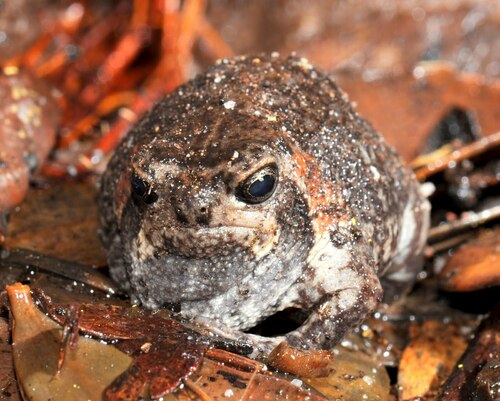 |
A small, round, fossorial rain frog. | Sometimes found in damp caves. | iNat: 179217363 |
| Clicking Stream Frog | Strongylopus grayii | 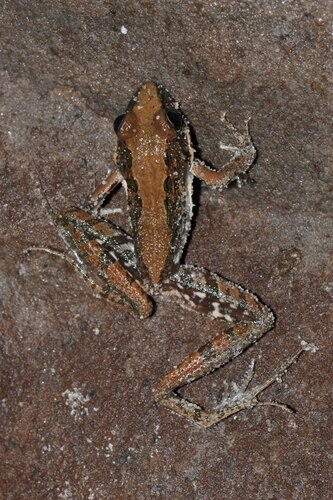 |
A fairly small, slender, agile ground-dwelling frog. | Sometimes found in caves. | iNat: 179217986 |
| Cape River Frog | Amietia fuscigula | 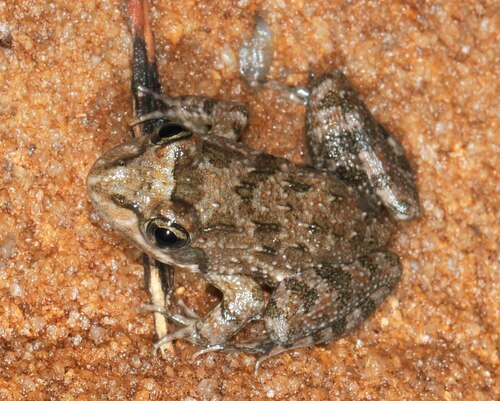 |
Occurs in the Eastern and Western Cape. | Sometimes washed into caves. | iNat: 179389275 |
| Poynton's River Frog | Amietia poyntoni | 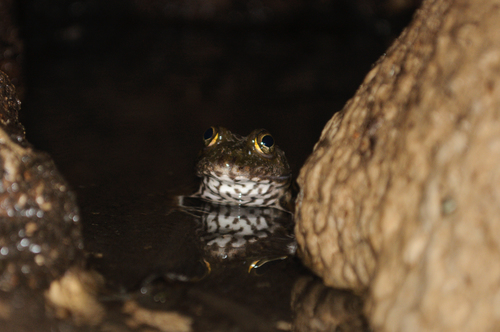 |
A river frog found from Namibia across South Africa. | A pools in caves. | iNat: 72901244 |
| Table Mountain Ghost Frog | Heleophryne rosei | ) |
Critically endangered, medium-sized frog endemic to South Africa. Purple or brown blotches on a pale green background | Climbing cave walls. | iNat: 179217440 |
| Cederberg Ghost Frog | Heleophryne depressa | ) |
A light to dark olive back marked with irregular maroon blotches. | Endemic to the Cederberg mountains. Climbs cave walls. | iNat: 204147140 |
Six legs
Insects are the most diverse group of cave-dwelling invertebrates. Many species are accidental visitors drawn in by darkness and moisture, while others — such as the Spelaeiacris cave cricket are true cave specialists adapted to life in permanent darkness. The Diplurans at the end of the list are not true insects, but do have six legs.
| Common Name | Scientific Name | Photo | Description | Where | iNat |
|---|---|---|---|---|---|
| Darkling Beetle | Eurychora | 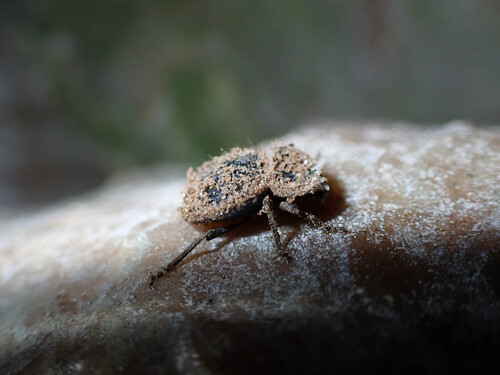 |
A flightless, ground-dwelling darkling beetle genus endemic to southern Africa, often found on cave floors. | Found in the transitional zone between twilight and darkness. | iNat: 313919279 |
| Peninsula Gnashing Cricket | Henicus brevimucronatus | 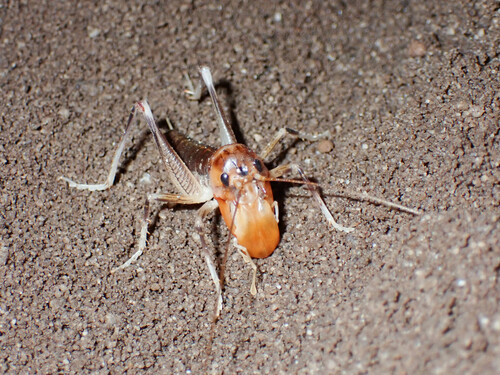 |
Playtpus king cricket in the family Aostostomatidae. Not seen often. | Found in the twilight zone of caves. | iNat: 264710555 |
| Beetle | Coleoptera | 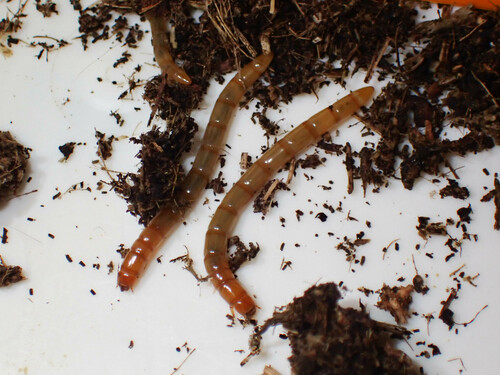 |
An unidentified larvae. | Found in the transitional zone between twilight and darkness. | iNat: 258869006 |
| Click Beetle | Elateridae | 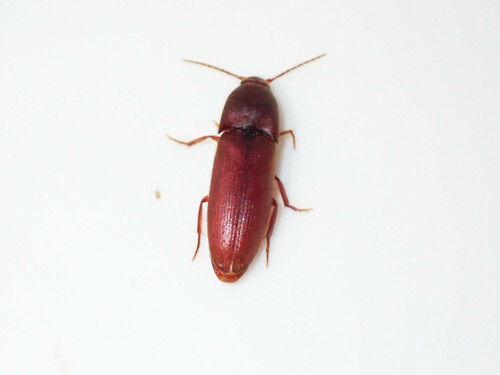 |
A beetle named for its ability to spring itself into the air with a loud, audible click when flipped onto its back. | Found in the twilight zone of caves. | iNat: 258675780 |
| Earwig | Antisolabis sulcatipes |  |
A South African earwig species, readily identified by the distinctive forceps-like cerci projecting from the tip of the abdomen. | Found in the transitional zone between twilight and darkness. | iNat: 220523023 |
| Cave Ground Beetle | Trechini | 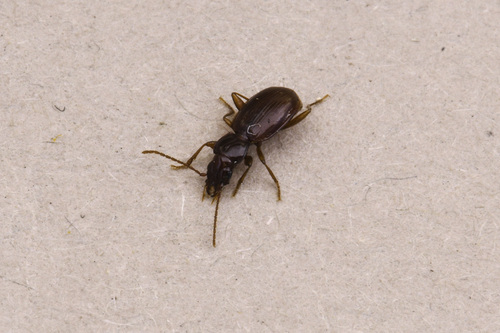 |
A tribe of highly adapted ground beetles, many of which are eyeless and depigmented, specialised for permanent cave life. | Found in the transitional zone between twilight and darkness. | iNat: 220492049 |
| Crane Fly | Tipulidae | 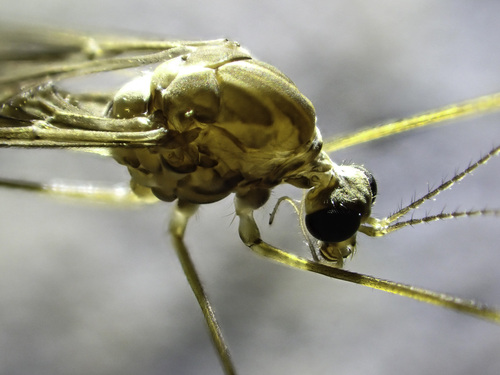 |
A large, long-legged fly that resembles a giant mosquito but is harmless, sheltering near cave entrances on cool, damp rock faces. | Found near cave entrances. | iNat: 219282150 |
| Cave Cricket | Pachyodontus languidus | 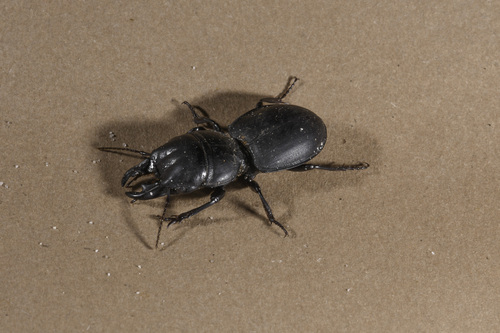 |
A ground cricket found deep in the dark zones of South African caves, feeding on organic detritus and guano. | Found deep in the dark zone of caves. | iNat: 216880434 |
| Carpet Beetle | Anthrenus | 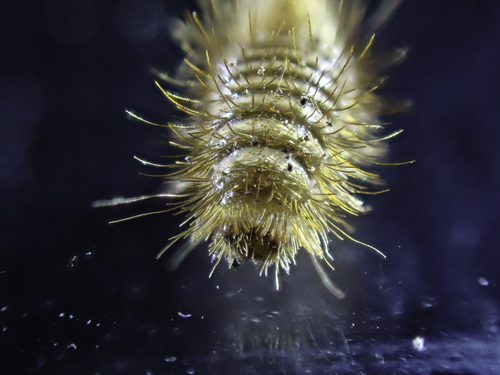 |
A small scavenging beetle whose larvae feed on organic matter such as bat guano, dead insects, and animal remains in caves. | Found deep in the dark zone of caves. | iNat: 215075709 |
| Bark Louse | Psocodea | 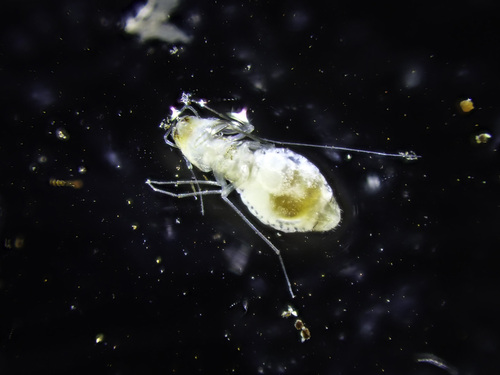 |
Tiny soft-bodied insects that feed on mould, fungi, and organic detritus, thriving in the rich substrates of cave floors. | Found deep in the dark zone of caves. | iNat: 215074798 |
| Rove Beetle | Staphylinidae | 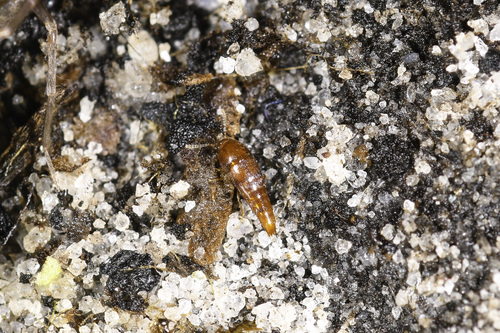 |
A large family of beetles recognisable by their short wing covers, found scavenging among organic matter in cave twilight zones. | Found in the twilight zone of caves. | iNat: 208566954 |
| Moth | Lepidoptera | 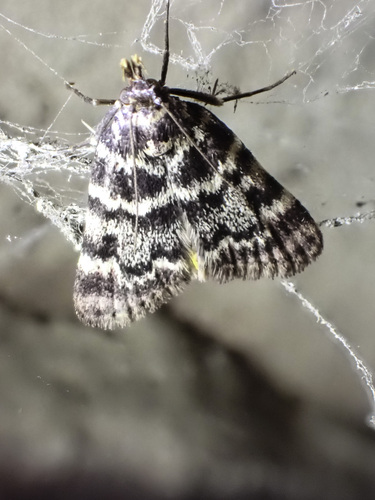 |
An unidentified moth using the cave twilight zone for daytime shelter; many moth species roost in caves to avoid predators. | Found in the twilight zone of caves. | iNat: 205142531 |
| Plaster Bagworm | Phereoeca | 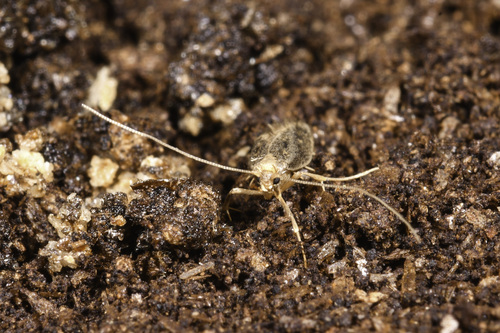 |
A small moth whose larvae construct distinctive flat, oval cases from fibres, dust, and debris, often plastered to cave walls. | Found deep in the dark zone of caves. | iNat: 204299976 |
| African Bat Bug | Afrocimex | 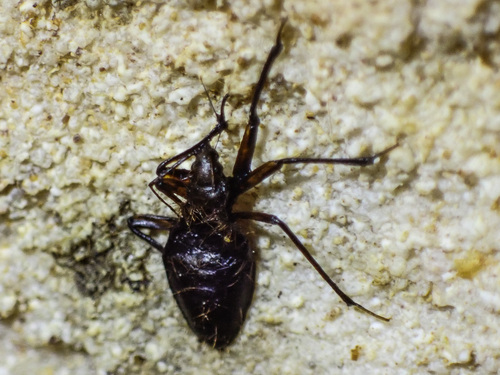 |
A blood-feeding ectoparasite of cave-dwelling bats, closely related to bed bugs; populations can number millions in large bat roosts. | Found deep in the dark zone of caves. | iNat: 204056789 |
| Fishfly | Taeniochauliodes fuscus | 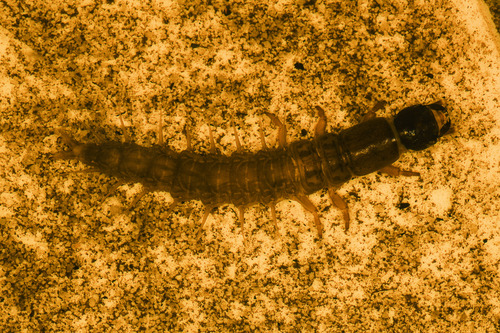 |
A large, soft-bodied insect in the order Megaloptera whose aquatic larvae develop in streams; adults often rest in caves. | Found deep in the dark zone of caves. | iNat: 199026335 |
| Ant-like Stone Beetle | Euconnus | 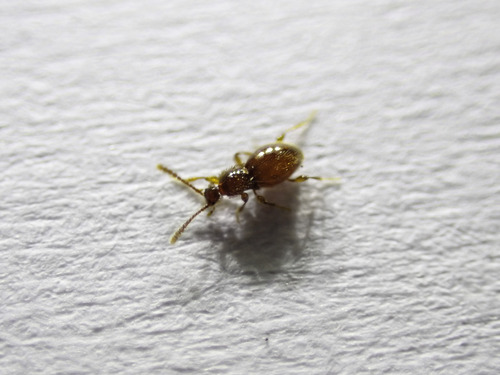 |
A tiny beetle in the rove beetle family that mimics ants in appearance, found among organic litter in cave twilight zones. | Found in the twilight zone of caves. | iNat: 191401919 |
| Snout Moth | Hypena commixtalis | 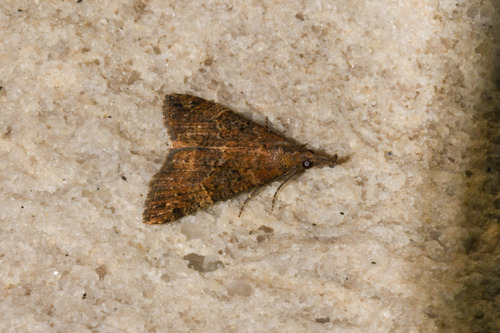 |
A moth of the family Erebidae with a distinctive forward-projecting snout, commonly roosting in cave twilight zones during the day. | Found in the twilight zone of caves. | iNat: 190766039 |
| True Fly | Diptera | 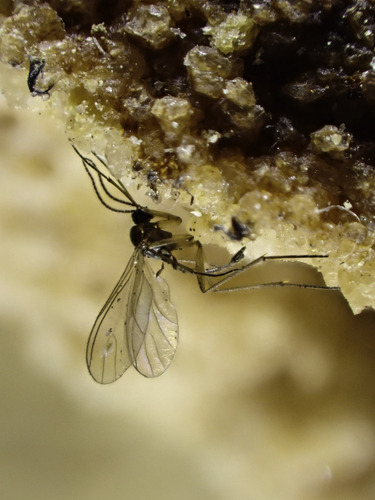 |
An unidentified member of the true flies, the large order of two-winged insects found throughout cave environments. | Found deep in the dark zone of caves. | iNat: 188507545 |
| Non-biting Midge | Chironomidae | 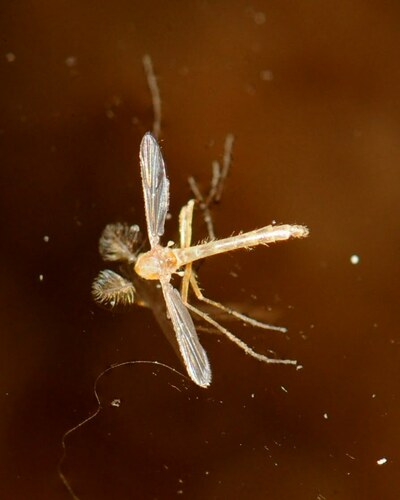 |
A small, mosquito-like fly whose aquatic larvae commonly develop in the pools and slow-flowing streams of cave systems. | Found deep in the dark zone of caves. | iNat: 179389531 |
| Table Mountain Cave Cricket | Spelaeiacris tabulae | 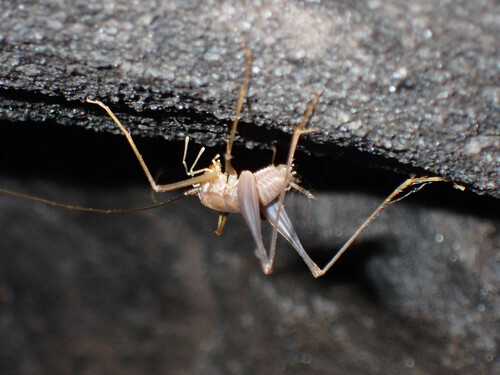 |
Table Mountain Cave cricket only occurs on the Cape Peninsula. The body is approximately 10mm, while the antennae can be 40mm+. | Throught cave systems from deep dark to entrance. Also makes surface excusions at night. | iNat:264013301 |
| Hex River Cave Cricket | Spelaeiacris monslamiensis | 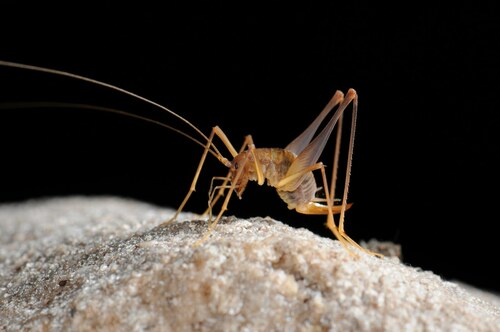 |
Hex river mountains cave cricket. | Found deep in the dark zone of caves. | iNat: 179389124 |
| Canescent Moth | Apisa canescens | 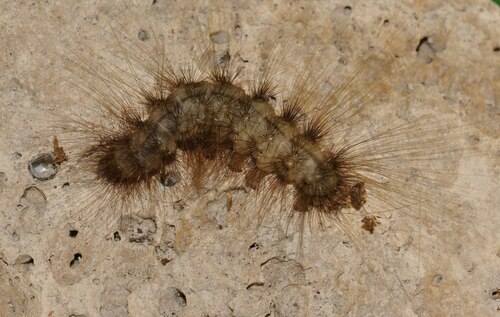 |
A greyish-white moth of the family Erebidae found roosting on the walls and ceilings of South African caves. | Found deep in the dark zone of caves. | iNat: 179360925 |
| Darkling Beetle | Tenebrionidae | 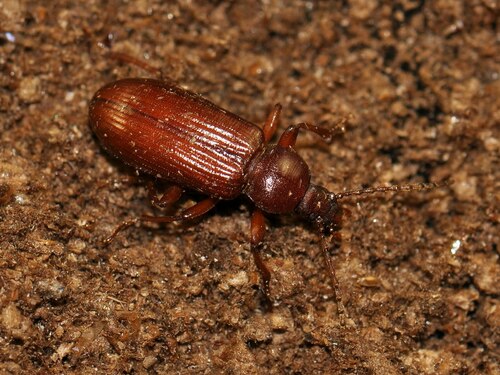 |
An unidentified darkling beetle; a large family well-adapted to dark, dry conditions and a common scavenger in cave environments. | Found deep in the dark zone of caves. | iNat: 179360165 |
| True Fly | Diptera | 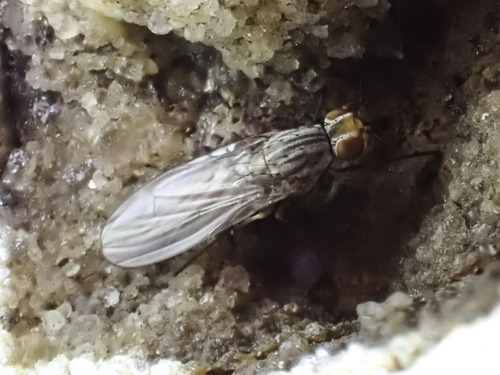 |
An unidentified member of the true flies, the large order of two-winged insects found throughout cave environments. | Found deep in the dark zone of caves. | iNat: 179140094 |
| Jumping Bristletail | Meinertellidae | 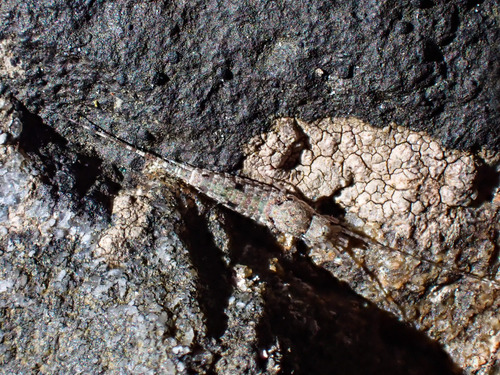 |
A primitive, wingless insect resembling a silverfish that can leap using its muscular abdomen; found in rocky and cave habitats. | Location within cave unknown. | iNat: 145351355 |
| Wingless Bat Fly | Penicillidia | 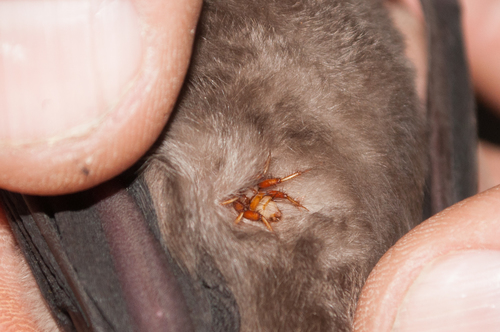 |
A highly specialised, completely wingless fly that lives as a blood-feeding ectoparasite exclusively on cave-roosting bats. | Found deep in the dark zone of caves. | iNat: 48577354 |
| Two-pronged Bristletail | Campodea | 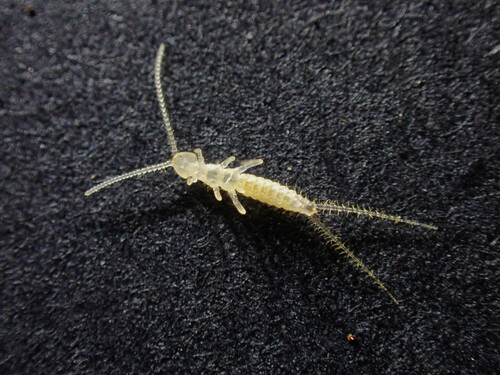 |
A pale, soft-bodied hexapod with long flexible cerci and antennae, frequently found in cave soils and leaf litter where it feeds on fungi and detritus. | Found in the twilight zone of caves. | iNat: 296251203 |
| Forcepstail | Japygidae | 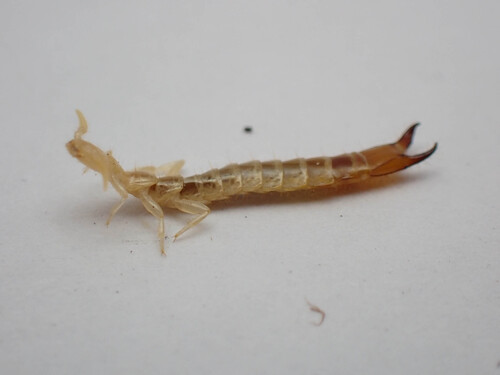 |
A predatory dipluran with distinctive pincer-like cerci used to catch springtails, isopods, and other small invertebrates in cave crevices. | Found in the transitional zone between twilight and darkness. | iNat: 317552090 |
Eight legs
Arachnids are the dominant eight-legged invertebrates in cave systems. South Africa's caves harbour a remarkable diversity of spiders, harvestmen, and mites — including several species found nowhere else on Earth.
| Common Name | Scientific Name | Photo | Description | Where | iNat |
|---|---|---|---|---|---|
| Mite | Acari | 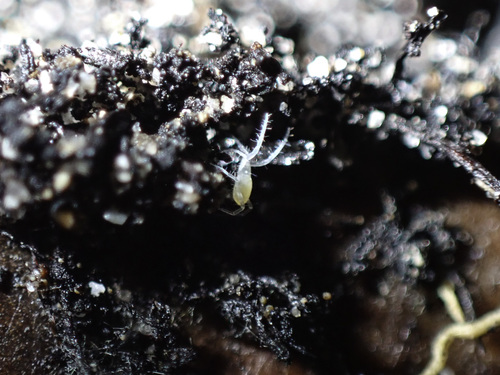 |
Tiny, often microscopic arachnids that scavenge organic detritus, bat guano, and fungal growth deep in cave substrates. | Found deep in the dark zone of caves. | iNat: 214850377 |
| Flatty Spider | Anyphops | 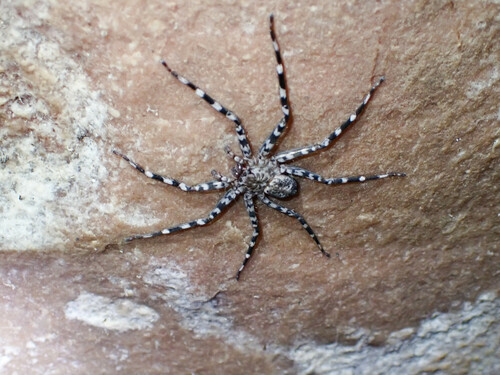 |
A remarkably flattened, free-ranging nocturnal spider endemic to southern Africa; presses itself flush against rock surfaces to hide. | Found in the twilight zone of caves. | iNat: 263910297 |
| Orb-weaver Spider | Araneoidea | 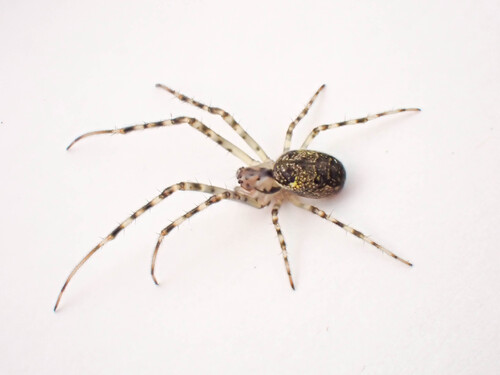 |
An unidentified spider in the superfamily that includes orb-weavers and cobweb spiders; often builds circular or irregular webs near cave openings. | Found in the twilight zone of caves. | iNat: 296252890 |
| True Spider | Araneomorphae | 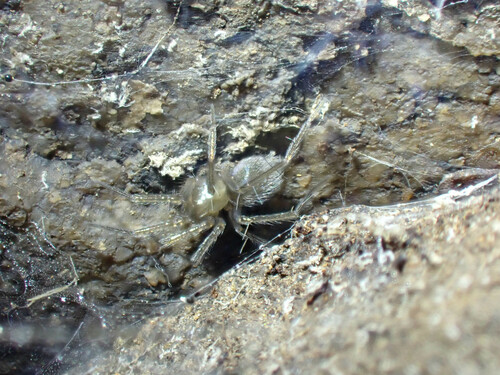 |
An unidentified modern spider from the infraorder that contains the vast majority of the world's spider species. | Found near cave entrances. | iNat: 264706123 |
| Disc Harvestman | Caddella | 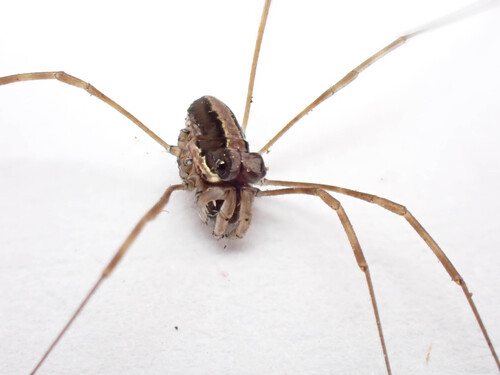 |
A harvestman genus endemic to southern South Africa in the family Caddidae, recognised by its distinctively flattened disc-like body. | Found in the transitional zone between twilight and darkness. | iNat: 316350073 |
| Cape Cave Harvestman | Cryptadaeum capense | 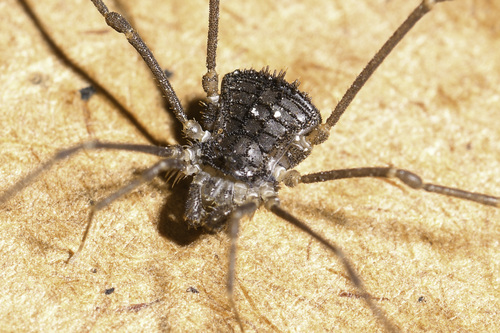 |
A harvestman species endemic to the Cape region; harvestmen resemble spiders but have a single fused body segment and no silk glands. | Found in the twilight zone of caves. | iNat: 202084381 |
| Comb-toed Spider | Hahnia | 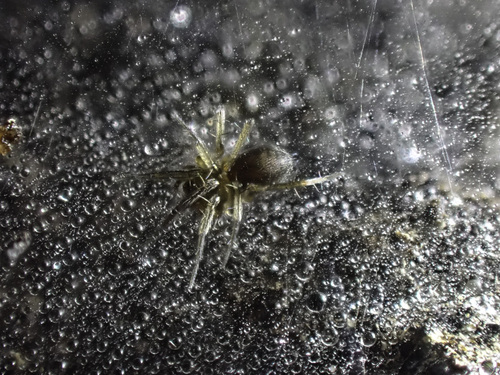 |
A small spider in the family Hahniidae that builds flat, sheet-like webs close to the ground or along cave walls. | Found in the twilight zone of caves. | iNat: 202523723 |
| Cape Shadow Harvestman | Izithunzi capense | 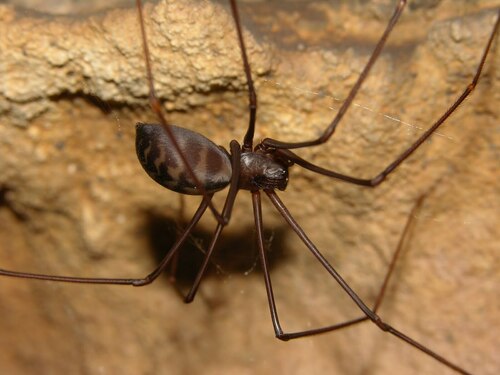 |
A Cape-endemic harvestman species found deep in cave systems; its name "izithunzi" is the Zulu word for shadow. | Found deep in the dark zone of caves. | iNat: 179221356 |
| Long-legged Harvestman | Macrobunidae | 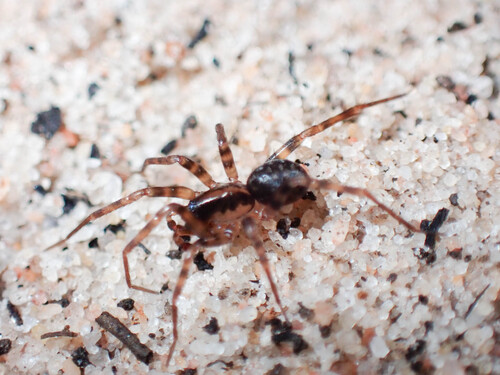 |
A family of harvestmen in the order Laniatores; characterised by long slender legs used to navigate uneven cave surfaces. | Found in the twilight zone of caves. | iNat: 316299666 |
| Long-legged Angel Harvestman | Malaika longipes | 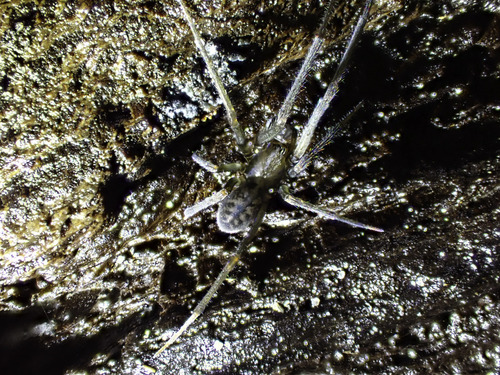 |
A harvestman species whose genus name means "angel" in Swahili and whose species name refers to its exceptionally long legs. | Found near cave entrances. | iNat: 182631237 |
| Haddad's Orb-web Spider | Metellina haddadi | 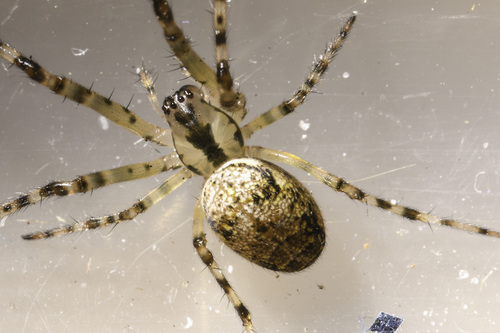 |
A South African spider in the family Tetragnathidae, named in honour of arachnologist Charles Haddad; builds orb webs in dark recesses. | Found deep in the dark zone of caves. | iNat: 204793777 |
| Harvestman | Opiliones | 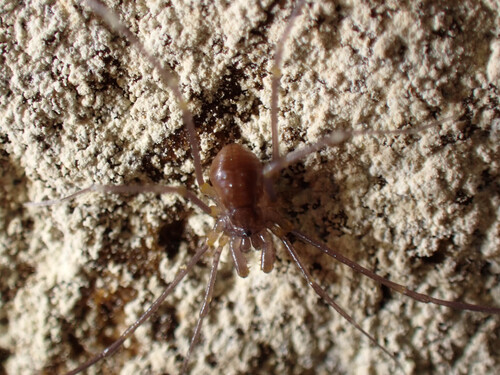 |
An unidentified harvestman; unlike spiders, harvestmen have a single oval body with no waist, no venom, and no silk glands. | Found in the transitional zone between twilight and darkness. | iNat: 317824922 |
| False Wolf Spider | Phanotea | 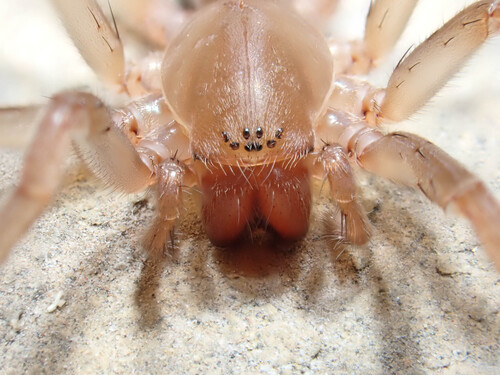 |
A genus of South African spiders in the family Zoropsidae that resembles wolf spiders; all 13 known species are endemic to South Africa. | Found deep in the dark zone of caves. | iNat: 323301336 |
| Laceweb Spider | Phyxelididae | 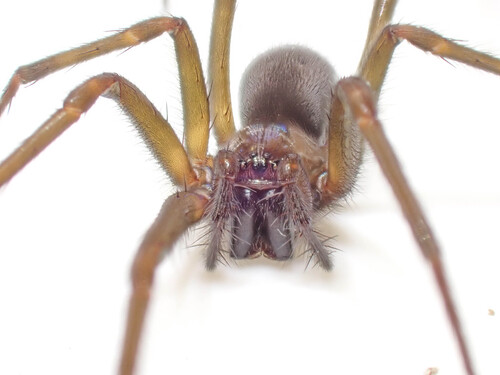 |
A family of African tunnel-web spiders that build intricate lacework sheet webs in dark, sheltered spots including cave entrances. | Found in the twilight zone of caves. | iNat: 287828498 |
| Illustrated Harvestman | Purcellia illustrans | 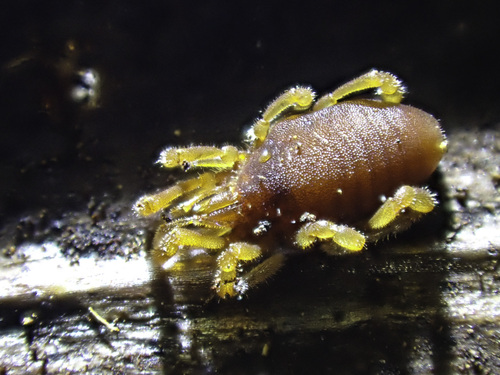 |
A South African harvestman species whose species name refers to distinctive markings on its body; found in the deep dark zones of caves. | Found deep in the dark zone of caves. | iNat: 202851554 |
| Spitting Spider | Scytodes | 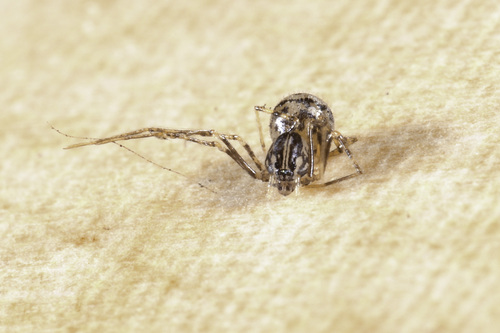 |
A unique predator that immobilises prey by spitting a venomous, sticky gum from up to 20mm away; several species specialise in cave habitats. | Found deep in the dark zone of caves. | iNat: 204299325 |
| Wynberg Cave Harvestman | Speleomontia cavernicola | 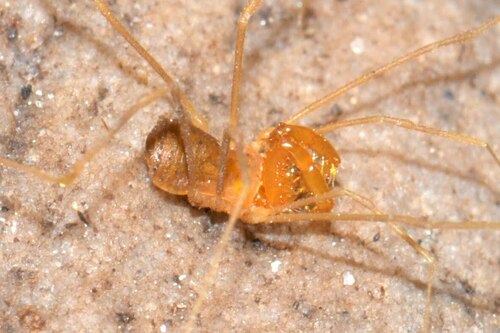 |
A harvestman endemic solely to the Wynberg Cave System on Table Mountain; one of South Africa's most range-restricted cave invertebrates. | Found deep in the dark zone of caves. | iNat: 179219298 |
| Cape Cellar Spider | Spermophora peninsulae | 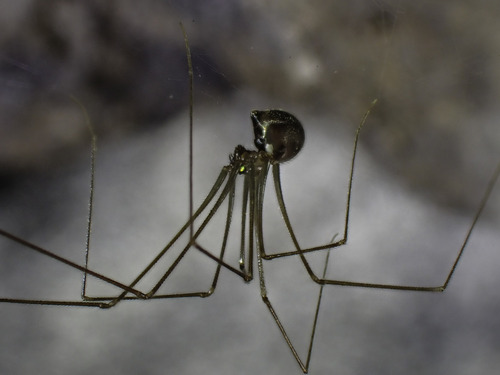 |
A small pholcid spider restricted to the Cape Peninsula; spins loose, irregular webs in dark, damp recesses and cave passages. | Found deep in the dark zone of caves. | iNat: 179141042 |
| Trapdoor Spider | Spiroctenus | 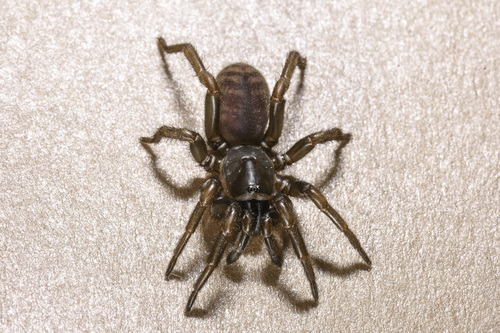 |
A mygalomorph spider in the family Bemmeridae that constructs a silk-lined burrow sealed with a hinged trapdoor to ambush passing prey. | Found deep in the dark zone of caves. | iNat: 214854283 |
| Cape False Widow | Steatoda capensis | 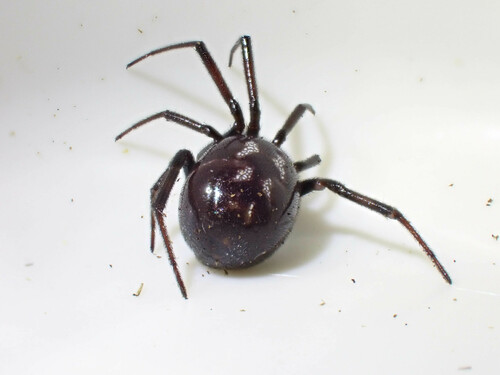 |
A shiny black cobweb spider native to South Africa; resembles a black widow but is far less venomous; now invasive in New Zealand and Australia. | Found in the transitional zone between twilight and darkness. | iNat: 258585796 |
| Cobweb Spider | Theridion | 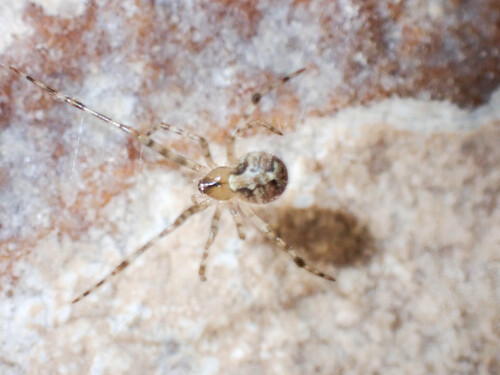 |
A widespread genus of comb-footed spiders that builds small, irregular cobwebs in sheltered corners and rocky overhangs near cave openings. | Found in the twilight zone of caves. | iNat: 287830220 |
Many legs
Cave systems in South Africa host a remarkable diversity of multi-legged invertebrates. Centipedes and millipedes are among the most frequent cave visitors, alongside symphylans and terrestrial crustaceans such as isopods and amphipods.
| Common Name | Scientific Name | Photo | Description | Where | iNat |
|---|---|---|---|---|---|
| Woodlice | Benthanops fulva | 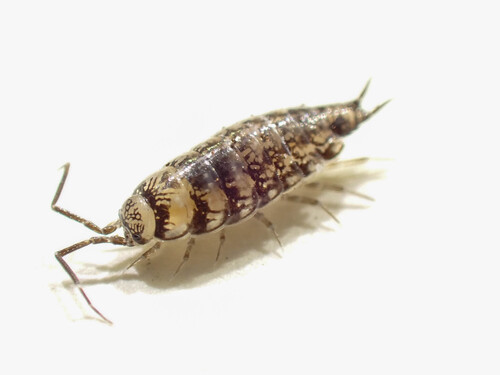 |
Small wood louse. | Found in and around cave entrances. | iNat: 305185672 |
| Fynbos Stripe Red Millipede | Centrobolus digrammus | 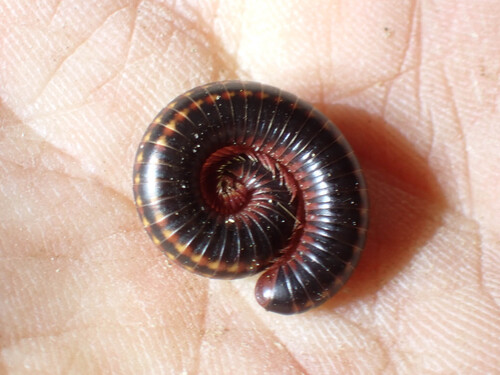 |
A red millipede with two dark dorsal stripes endemic the Western Cape, occasionally sheltering in cave twilight zones. | Found in the entrance and twilight zone of caves. | iNat: 317559236 |
| Scolopendrid Centipede | Cormocephalus | 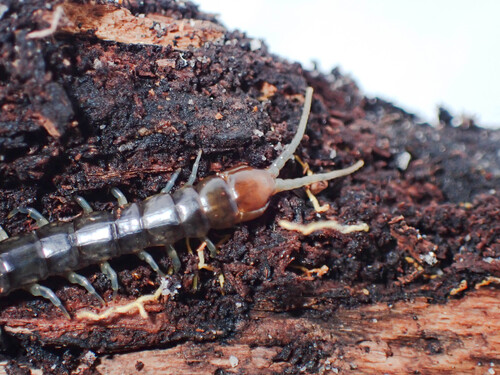 |
A large, fast-moving centipede equipped with venomous forcipules; an active predator capable of a painful bite if handled. | Found in the twilight zone of caves. | iNat: 296321087 |
| Blind Centipede | Cryptops | 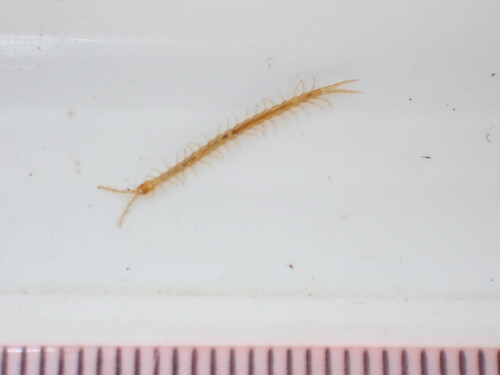 |
A small, eyeless scolopendromorph centipede; the lack of eyes is a natural adaptation to permanently dark soil and cave environments. | Found in the soil in cave entrances. | iNat: 304070070 |
| Flat-backed Millipede | Dalodesmidae | 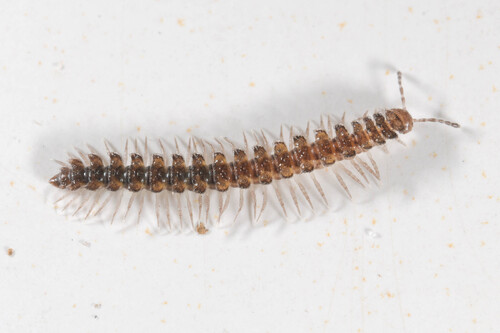 |
A family of flat-backed millipedes with distinctive lateral keels on their body segments; found scavenging organic matter deep in cave systems. | Found deep in the dark zone of caves. | iNat: 278170739 |
| Garden Centipede | Hanseniella | 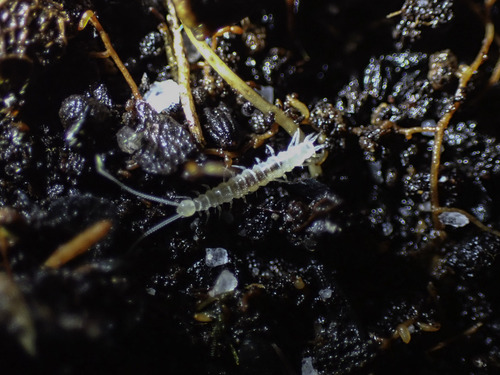 |
A symphylan, not a true centipede; a soft-bodied, 12-legged soil arthropod that feeds on fungal hyphae and organic matter in cave substrates. | Found throughout caves crawling through the soil. | iNat: 182993835 |
| Stone Centipede | Henicopidae | 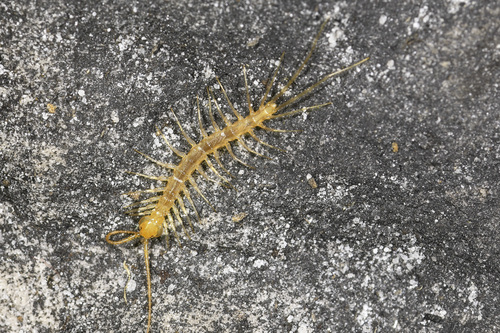 |
A family of small, agile centipedes in the order Lithobiomorpha; typically found under stones and in cave twilight zones hunting small invertebrates. | Found in the twilight zone of caves. | iNat: 208571879 |
| Snake Millipede | Julidae | 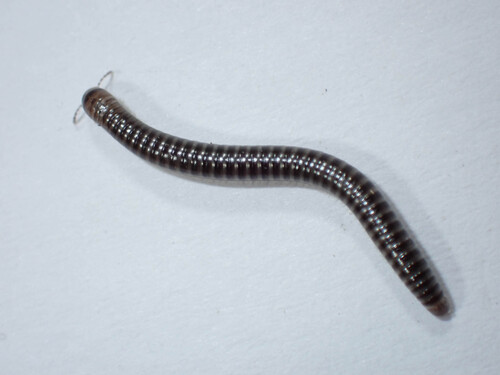 |
A family of smooth, cylindrical millipedes that move in a characteristic wave-like motion using hundreds of tiny legs working in coordinated sequence. | Found near cave entrances. | iNat: 304067222 |
| Stone Centipede | Lithobiomorpha | 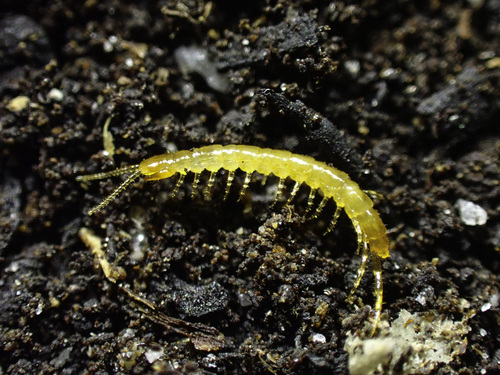 |
An order of agile centipedes with exactly 15 pairs of legs; active nocturnal hunters that shelter under stones and in cave crevices during the day. | Found in rich soils in caves. | iNat: 202852689 |
| Handsome Reddish-brown Centipedes | Paralamyctes | 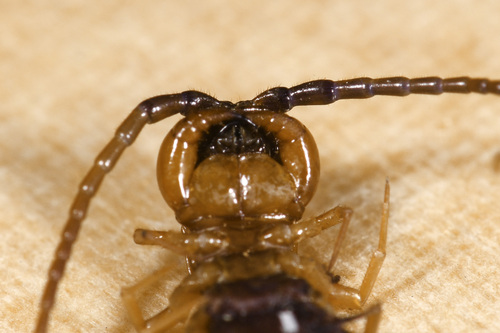 |
A centipede genus whose distribution traces the ancient supercontinent Gondwana, with species found in southern Africa, Australia, and South America. | Found deep in the dark zone of caves. | iNat: 204112899 |
| Cape Stone Centipede | Paralamyctes asperulus | 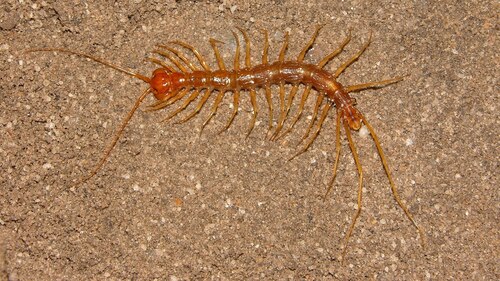 |
A lithobiomorph centipede endemic to the Cape region of South Africa, found deep in cave passages where it preys on small invertebrates. | Found deep in the dark zone of caves. | iNat: 179214371 |
| Flat-backed Millipede | Polydesmida | 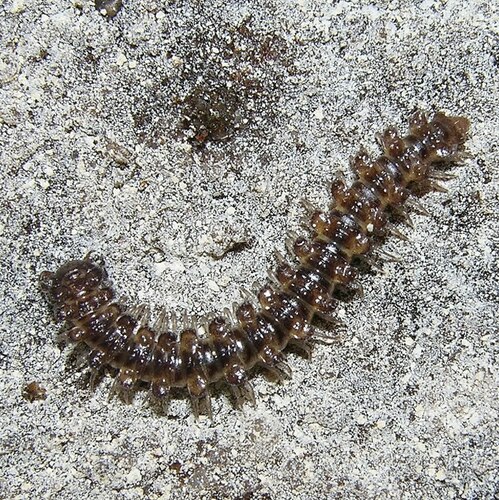 |
The largest order of millipedes, recognised by broad flat body segments with prominent lateral keels; many species are depigmented cave specialists. | Found deep in the dark zone of caves. | iNat: 179220361 |
| Pill bug | Pseudodiploexochus | 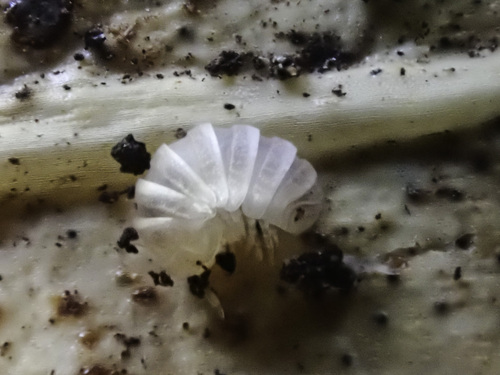 |
Very small wood louse. | Found soils in caves. | iNat: 202853166 |
| Giant Pill Millipede | Sphaerotherium | 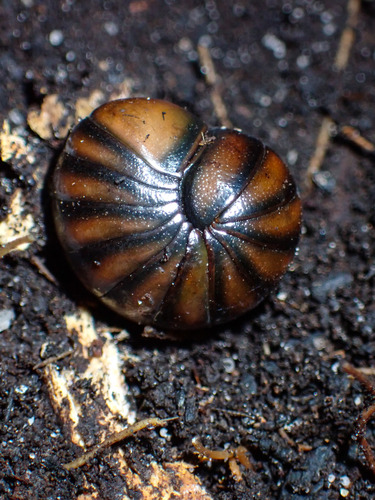 |
Africa's largest pill millipede; rolls into a perfectly smooth, impenetrable ball up to the size of a ping-pong ball when threatened. | Found in the twilight zone of caves. | iNat: 190796844 |
| Cave Isopod | Styloniscus tabulae | 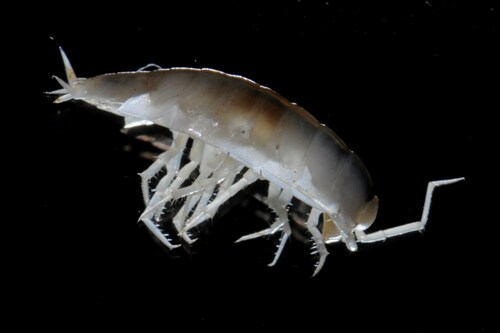 |
A family of terrestrial isopods (woodlice relatives) that have successfully colonised cave environments in southern Africa, feeding on organic detritus. | Found deep in the dark zone of caves. | iNat: 179222221 |
| Land Hopper | Talitroidea | 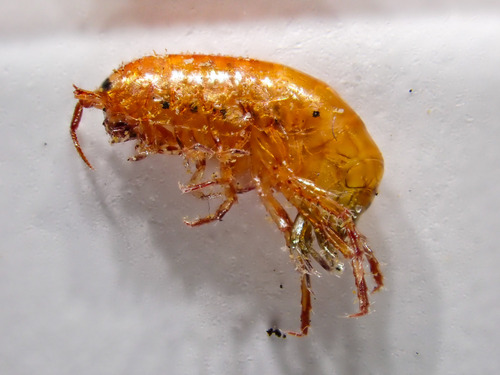 |
A superfamily of terrestrial amphipods that jump vigorously when disturbed; several species have colonised moist cave twilight zones in southern Africa. | Found in the soil in the entrance and twilight zone of caves. | iNat: 191401373 |
In the water
| Common Name | Scientific Name | Photo | Description | Where | iNat |
|---|---|---|---|---|---|
| Isopod | Asellota | 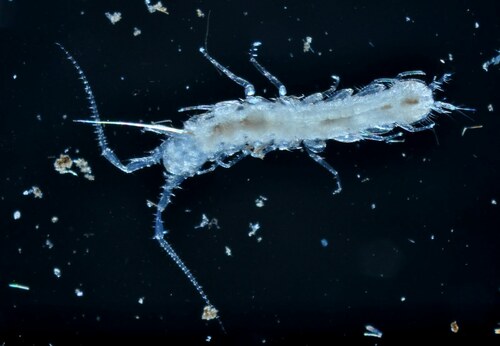 |
Tiny (<1.5mm) isopod. | Found deep in the dark zone of caves. | iNat: 179215822 |
| Flatworm | Dugesiidae | 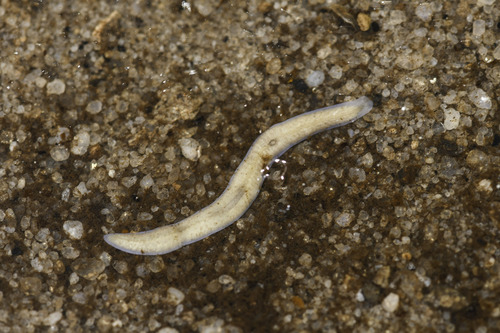 |
Squidgy flatworm found patrolling cave pools. Often stuck to the underside of rocks. | Found deep in the dark zone of caves. | iNat: 180628839 |
| Flatworm | Dugesiidae | 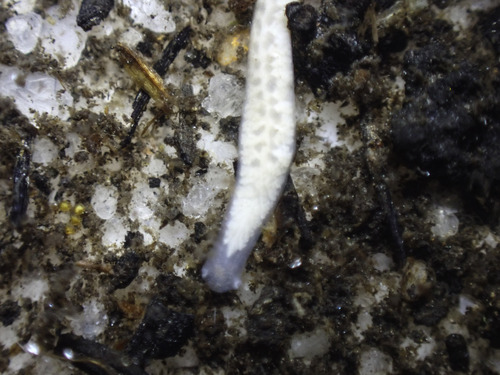 |
Squidgy flatworm found patrolling cave pools. Often stuck to the underside of rocks. | Found near cave entrances. | iNat: 186057522 |
| Flatworm | Dugesiidae | 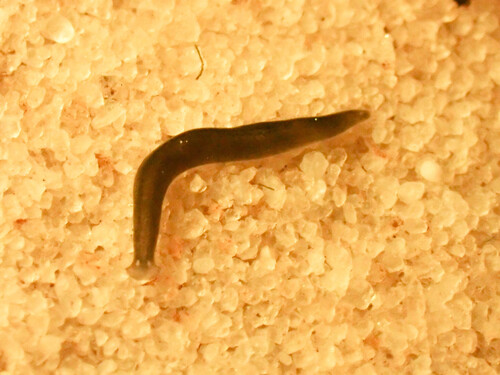 |
Squidgy flatworm found patrolling cave pools. Often stuck to the underside of rocks. | Found in the twilight zone of caves. | iNat: 278150906 |
| Cave shrimp | Paramelita barnardi | 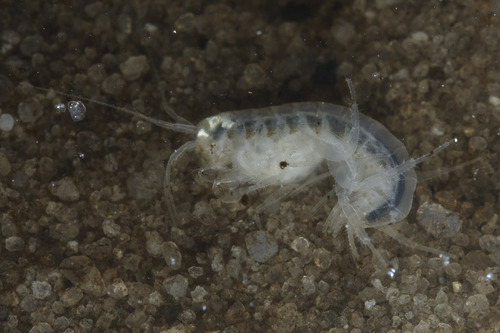 |
Shrimp like, about 9mm long, lying on its side in pools. | Found deep in the dark zone of caves. | iNat: 180960606 |
| Cave shrimp | Paramelita capensis | 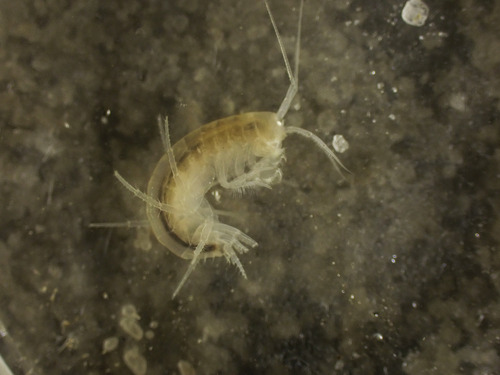 |
Shrimp like, up to 18mm long, lying on its side in pools. | Found deep in the dark zone of caves. | iNat: 188508458 |
| Cave shrimp | Paramelita nigroculus | 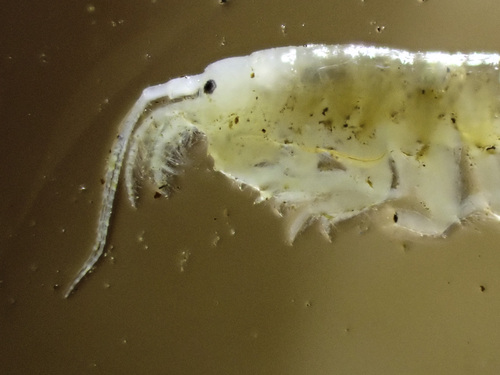 |
Black eyed cave shrimp. | Found deep in the dark zone of caves. | iNat: 204259532 |
| Table Mountain Cave Shrimp | Spelaeogriphus lepidops | 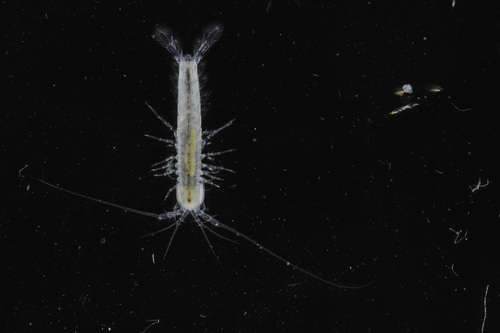 |
Endemic to Table Mountain. | Found deep in the dark zone of caves. | iNat: 219284663 |
| Fish fly larva | Taeniochauliodes fuscus | |
25-35mm long. Often found in streams in caves. | Found deep in the dark zone of caves. | iNat: 199026335 |